1
of 4
Alan Karchmer
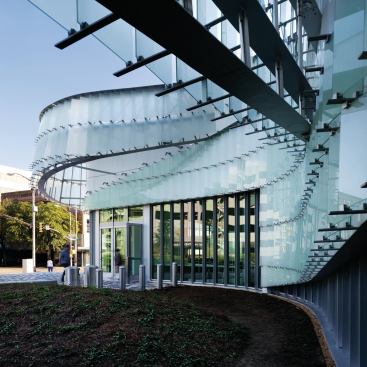
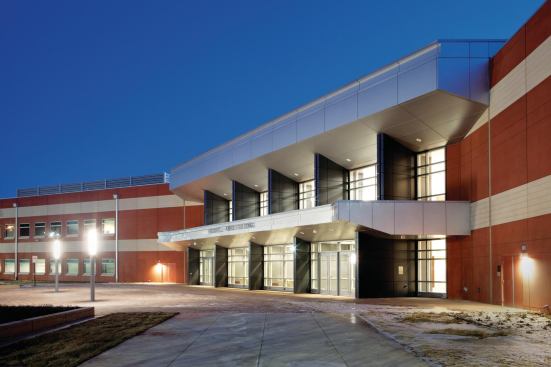
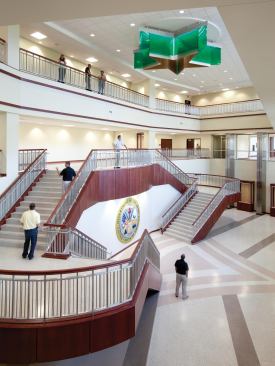
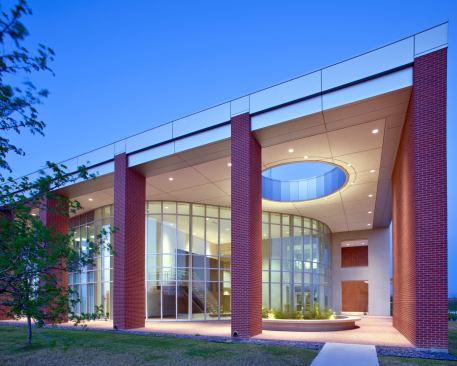
The General Services Administration commissioned Schwartz/Silver…

Alan Karchmer
The General Services Administration commissioned Schwartz/Silver…
Government clients often prefer the design/build delivery method, in which architectural design and contractor services are rolled into a single agreement, Mecham says. “There is one contact, one person to go talk to when something goes wrong.” In this case, he says, the contractor is more likely than the architect to take the lead on the owner’s behalf.
However, clients in the private sector, Mecham says, prefer delivery methods such as multiple prime—in which each construction discipline is bid separately—or CM-at-risk, in which the construction manager must deliver the project with a Guaranteed Maximum Price. “Some owners in mission-critical [projects] want to keep some of the specialty consultants under their wing because they have proprietary information” on technical or mechanical systems, he says. Keeping separate contracts makes that discretion easier. “The owner still feels like they control the design,” he says, but that only increases the responsibilities of the architect to coordinate and manage the disparate parts of the team.
Battening Down the Digital Hatches
Long before any portion of a building is designed, architects can contribute to a mission-critical facility through master planning and site selection; the latter has become particularly important for sustainability and security reasons. Data centers, for example, are increasingly located in temperate, arid climates to reduce cooling loads. Other facilities may require an underground location in order to provide shielding from electromagnetic pulse attacks, which can reveal their location.
From site selection onward, the timeline for mission-critical architecture only accelerates. Fentress’s Mecham has worked on projects that have gone from schematic design to final construction documents in six weeks. “The technology industry is constantly changing,” he says. “Once you have a new technology, you want to implement it as soon as you can.”
Redundancy—virtual and physical—is a key tenet in protecting mission-critical buildings from cyber attacks. For example, backup electrical power sources and servers are a must in ensuring a system remains in operation, even if a portion of it fails or goes offline. “We give … that facility and those users time to react to the threat,” Luman says. “And we can give our IT professional something critical to his operation: a continuous power feed. It’s not only protection of physical systems, but we’ve got to bring to our facilities multiple sources of power generation: dual feeds to separate grids and stand-alone generator sets.” The dual electricity sources should be connected to separate substations.
Though cyberattackers will typically act from a remote location, preventing physical infiltration of a facility remains imperative. High-risk, vulnerable areas such as loading docks, mailrooms, and parking garages must have extra security systems and surveillance capabilities. Structural systems, walls, and windows must often be strengthened. “One of the things we can do in our physical design is slow down the attacker,” Luman says. “Delay the attack through some type of fencing, berms, or manmade type barrier. That gives us time for the security personnel to react.”
The preventative design may start with the building’s landscaping. A minimum 100-foot easement will help reduce the effects of a detonated device on the facility. The most secure and economical wall material is concrete, preferably a foot thick or more. The building can also be divided into a series of concentric layers, such as at the Pentagon, or into secured zones going from exterior to interior, with commensurate security levels required for subsequent entry. Concentrating the most protected assets together rather than in multiple areas will offer the most efficiency.
A building’s heating and cooling systems are also areas of interest given their importance in cooling servers and their ability to distribute airborne toxins in the case of a terrorist attack. Segregated HVAC systems can protect sensitive areas. Advanced building management systems that provide real-time data and operate from a central command center are also invaluable. “Having a one-button, easy approach to shutting down the HVAC system is often included as a requirement by mission-critical clients,” Mecham says. “And that’s part of what architects bring to the table: our increasing ability to provide analytical tools.”

No recommended contents to display.