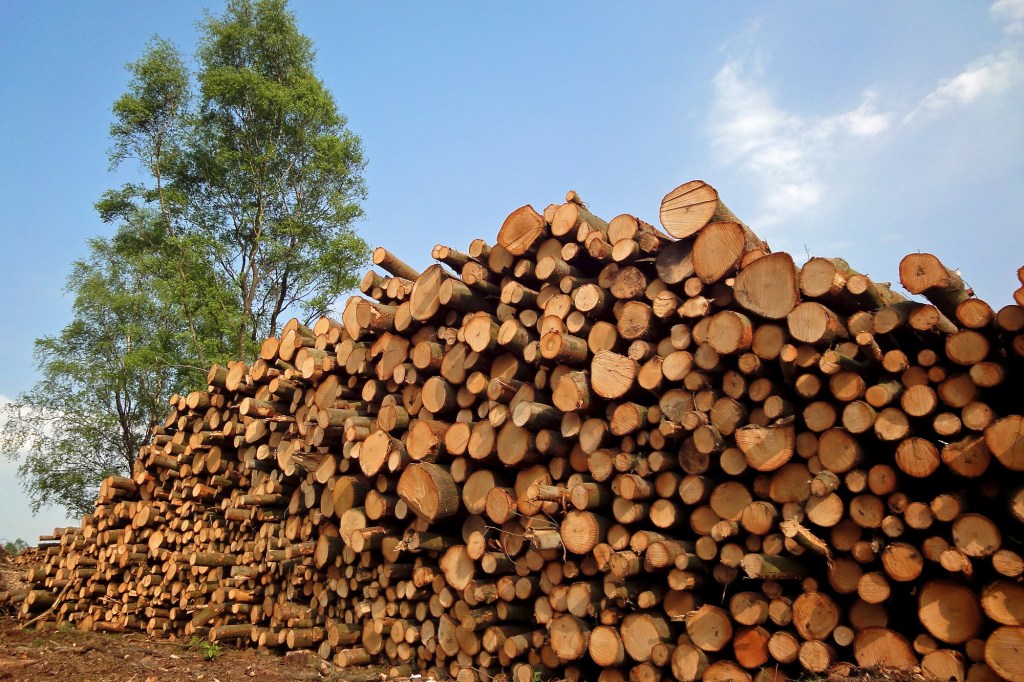
Specifiers seeking LEED credits for sustainably sourced wood now have more options, the U.S. Green Building Council announced this month. Previously, only FSC-certified products counted for points toward LEED certification for the use of responsibly and legally sourced wood. However, a new pilot Alternative Compliance Path opens up all certifications approved under ASTM D7612-10—including, most notably, that of the Sustainable Forestry Initiative. The goal is to reduce the volume of irresponsibly or illegally sourced wood used in projects while responding to a renewed interest among architects toward using timber in place of steel and concrete, when possible. The new compliance path applies to both LEED 2009 and v4. [Treehugger + USGBC]
ICYMI: Our new podcast, ArchitectChats, covers trees that work like steel, the 2016 PXSTL Design-Build Competition Winners, and a pep talk for anyone thinking about taking the Architect Registration Exam. [ARCHITECT]
The City of San Francisco will soon require new buildings of 10 or fewer stories to install solar panels. However, simply allowing greater density in that city could have a more profound effect on energy consumption in the region. [Vox]
A new, massive database is pulling information from 800 public and private agencies nationwide to create maps that show which areas of the country are accessible via public transportation and how the presence—or absence—of those services is impacting residents. [CityLab]
Testing the limits of the novel smart fabric developed by Google’s Project Jacquard team with integrated gesture and touch recognition. [MIT Technology Review]
The Sam Fox School at Washington University in St. Louis is phasing out the use of styrene in its model-making shops, with plans to ban the material completely by the fall. [Student Life]
Office microbiomes vary noticeably by city, with “human skin bacterial communities” as the biggest source of microbes. Knowing where it’s all coming from is one step to designing healthier interior environments. [FastCoExist]