Our sister lighting magazine covers the importance of circadian rhythms and how lighting affects how ours are manipulated and alters it (in good ways and bad). Most recently, Mariana Figueiro, a professor at the Lighting Research Center at Rensselaer Polytechnic Institute where she also directs the Light and Health program and is the acting director, delved deeply into this topic. “The LRC has shown in many of our field studies that light levels in the built environment are at or below threshold for activation of the circadian system,” writes Figueiro. “This can have at least two health consequences: First is that people may not be getting enough morning light to promote entrainment; second is that exposure to low levels of circadian-effective light during the day may increase the impact of evening light, including those coming from bright, self-luminous displays.” Read professor Figueiro’s full article at Architectural Lighting.
Rethinking Exposure to Saturated Colored Light
Doses of red and blue light can be a means of increasing daytime alertness and nighttime sleep.
1 MIN READ
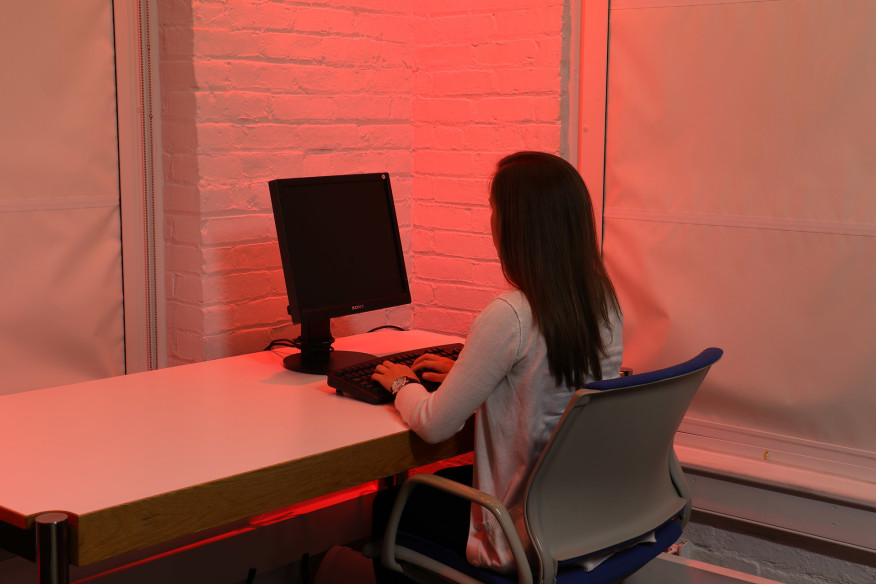
Courtesy LRC