
Project Description
FROM ETH ZURICH:
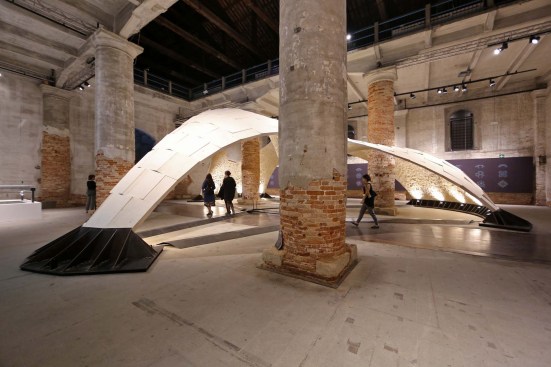
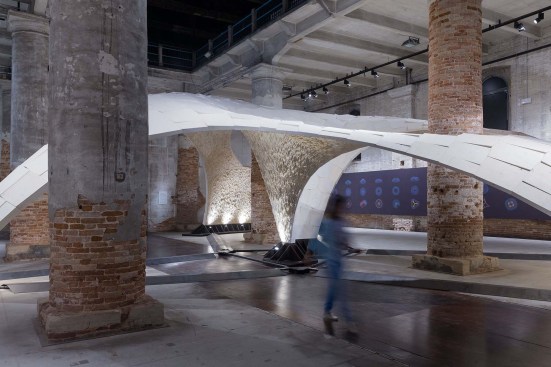
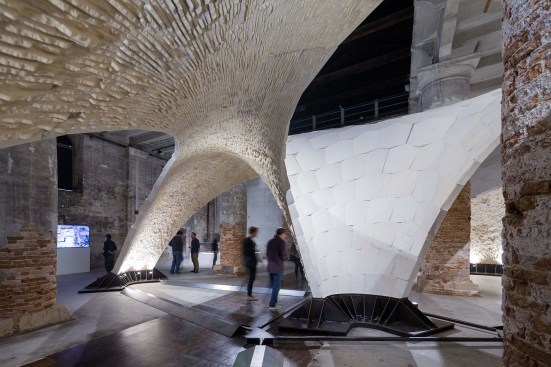
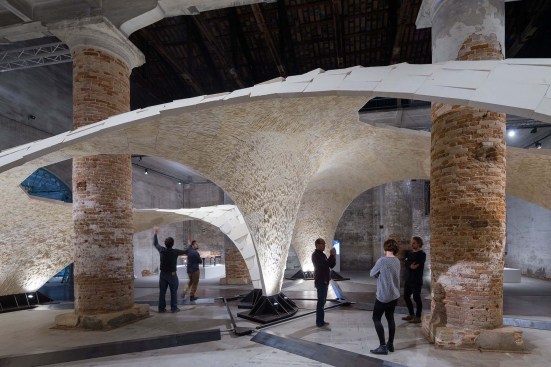
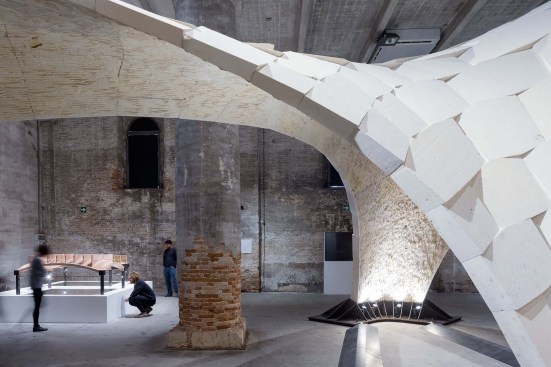
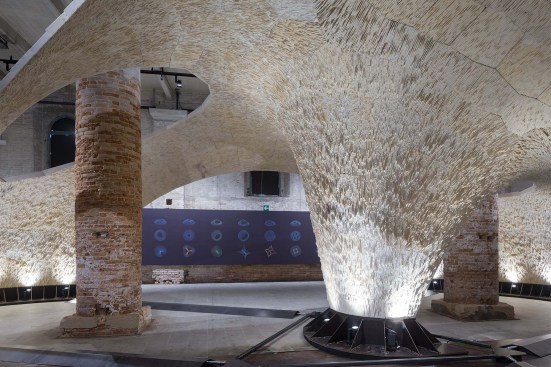
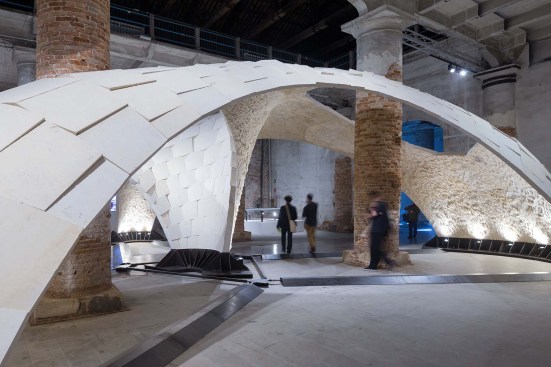
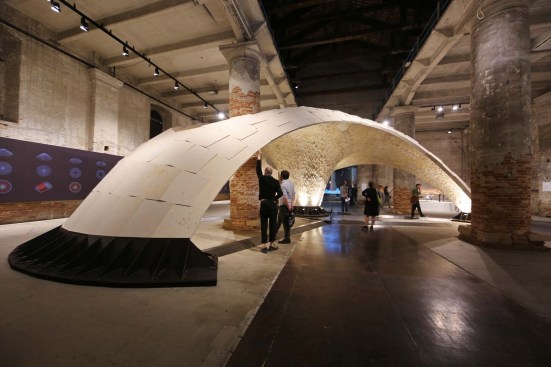
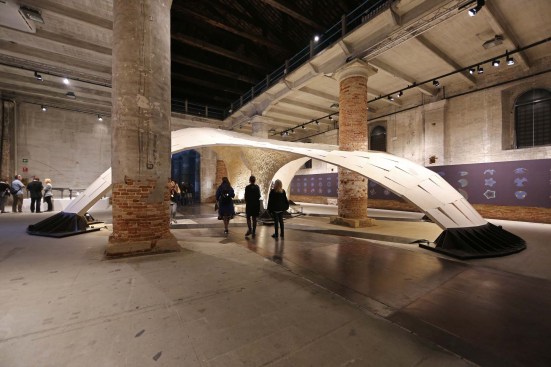
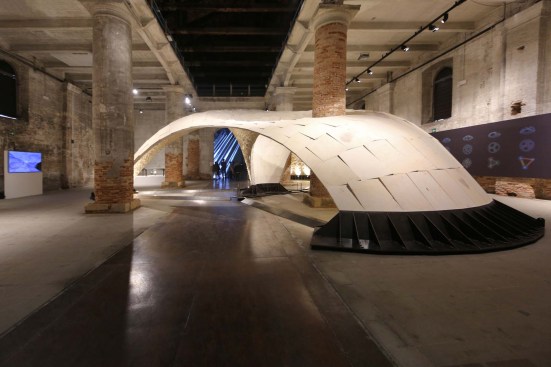
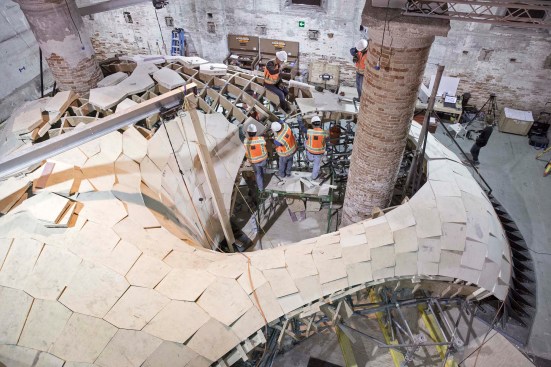
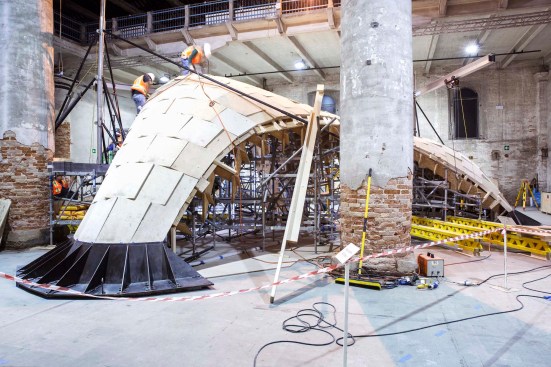
The exhibition’s centrepiece, the Armadillo Vault, embodies the beauty of compression made possible through geometry. Its shape comes from the same structural and constructional principles as the stone cathedrals of the past enhanced and extended by computation and digital fabrication. Comprised of 399 individually cut stones, unreinforced and without mortar, the vault spans 16 metres with a minimum thickness of only 5 centimetres. The tension ties balance the form, and funicular geometry allows the vault to stand in pure compression.
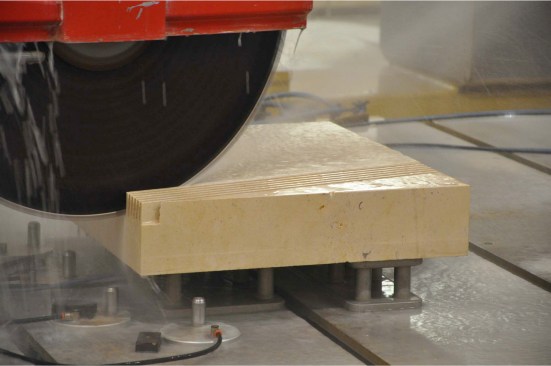
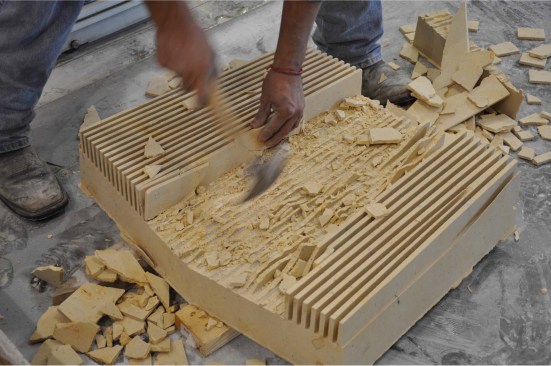
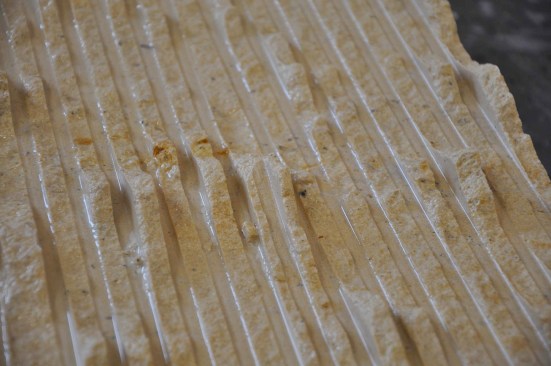
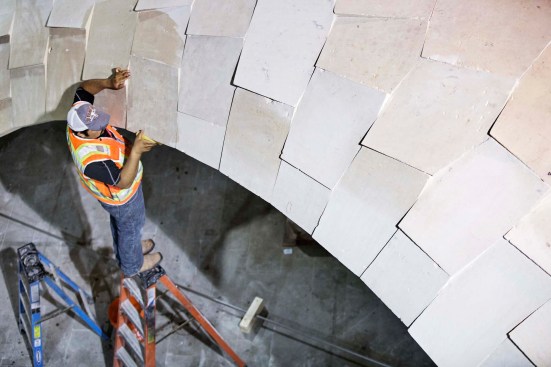
The sophisticated form of the Armadillo Vault emerged from computational graphic-statics based design and optimisation methods developed by the Block Research Group. The engineering of the geometrically discrete shell, done by ODB Engineering, also used innovative computational approaches to assess stability. Each stone is informed by structural logic, by the need for precise fabrication and assembly, by the hard constraints of a historically protected setting in the Biennale’s Corderie dell’Arsenale, as well as by tight limitations on time, budget, and construction. To simplify the fabrication process and avoid the need to flip the stones during cutting, the limestone wedges are planar and smooth on the exterior. Their interior sides are marked by a series of grooves resulting from initial rough cutting. Rather than mill these surfaces away, they remain as an expressive feature, aligned with purpose to serve as visual reminders of the force flow.
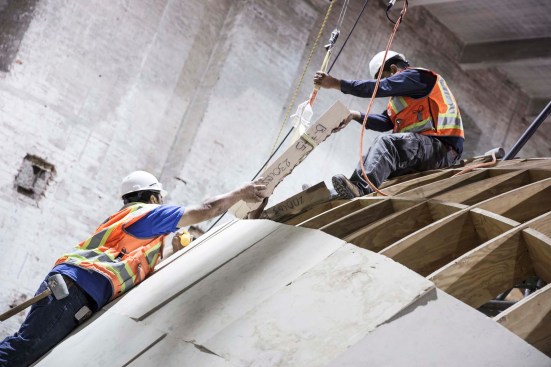
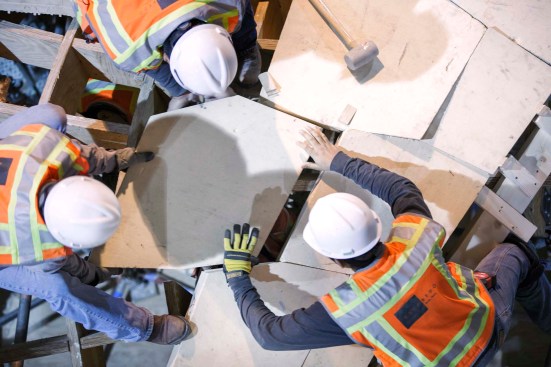
After its initial fabrication and assembly by The Escobedo Group in Texas, the vault was carefully measured and marked, disassembled and shipped to Venice, where the same team of master stonemasons reassembled it on site in just over two weeks. Like an intricate 3D puzzle, it could be deconstructed and built again at future locations.
Inspired by historical tile vaults, contemporary fabrication methods move beyond masonry to create new design possibilities for ribbed vaults in a variety of settings. Uninhibited by traditional fabrication constraints, new structural form-finding and optimisation methods can result in more efficient geometry in compression. The compressive vaults thrust outward on the supports, but this thrust is absorbed by tension ties. Like their historical precedents, such vaults demonstrate significant savings in weight and environmental impact compared to conventional concrete slabs and thus inspire new floor systems created with ultra-thin concrete and 3D print technology.