
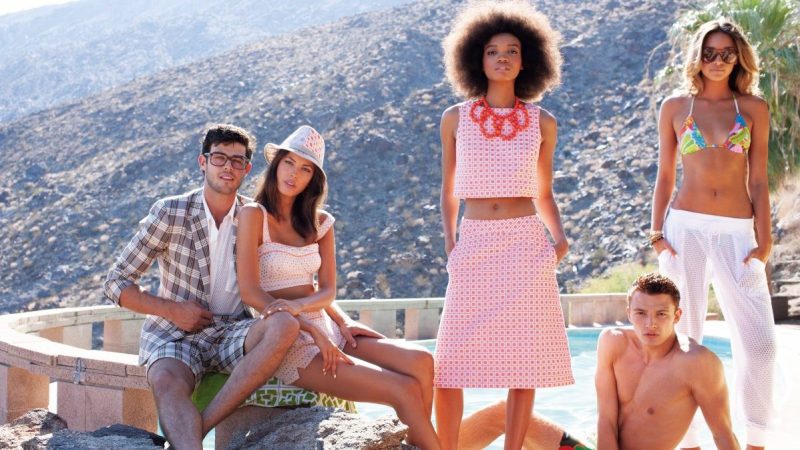
For architects, the fashion show might seem far removed from studio critiques and site visits. But Fashioning Architecture: What the Runway Borrows from Architecture, on view through June 7, 2026, at the Palm Springs Art Museum’s Architecture and Design Center, Edwards Harris Pavilion, makes a compelling case that the two disciplines are deeply intertwined.
Curated by Christine Vendredi, JoAnn McGrath Executive Director of the Palm Springs Art Museum, the exhibition explores how architecture shapes the way fashion is presented, experienced, and ultimately understood. Through videos, archival and contemporary photography, architectural drawings, and interviews with fashion-world practitioners, the show traces how fashion houses rely on spatial frameworks—buildings, courtyards, pavilions, and landscapes—to structure movement, control perspective, and tell a story.
“Architecture is not a backdrop to the fashion show,” Vendredi says. “It is an active force that shapes movement and meaning. This exhibition foregrounds architecture as a design language that structures the fashion show and defines how collections are introduced to the world.”
For architects, the idea makes sense. A runway is a procession. A venue directs movement. A facade sets the tone. In Southern California, that often means glass walls, deep overhangs, built-ins, and the swimming pool—now a global symbol of the California modern lifestyle.
Presented as part of the museum’s Architecture and Design initiative, the exhibition continues its exploration of Southern California modernism and its influence beyond the region. An accompanying catalogue expands on the theme with archival material, new photography, and interviews.
Extending the Conversation at Modernism Week
During Modernism Week, Vendredi will join a February 19 panel discussion at the museum moderated by ARCHITECT Editor-in-Chief Paul Makovsky and presented by Marvin. The session examines how California Modernism evolved—and how it continues to travel.
In that context, Fashioning Architecture offers a timely lens. California Modernism has long served as shorthand for a particular kind of aspirational lifestyle—sunlight, landscape, indoor-outdoor flow, and spatial ease. Fashion brands have embraced that imagery for decades, using modern houses not simply as scenic backdrops, but as carriers of cultural meaning.
Vendredi brings an especially interesting perspective to the discussion. With a background that bridges European cultural institutions and the global luxury sector, she sees how Southern California modern architecture resonates abroad, often standing in for informality and a seamless relationship to nature.