Georges Fessy
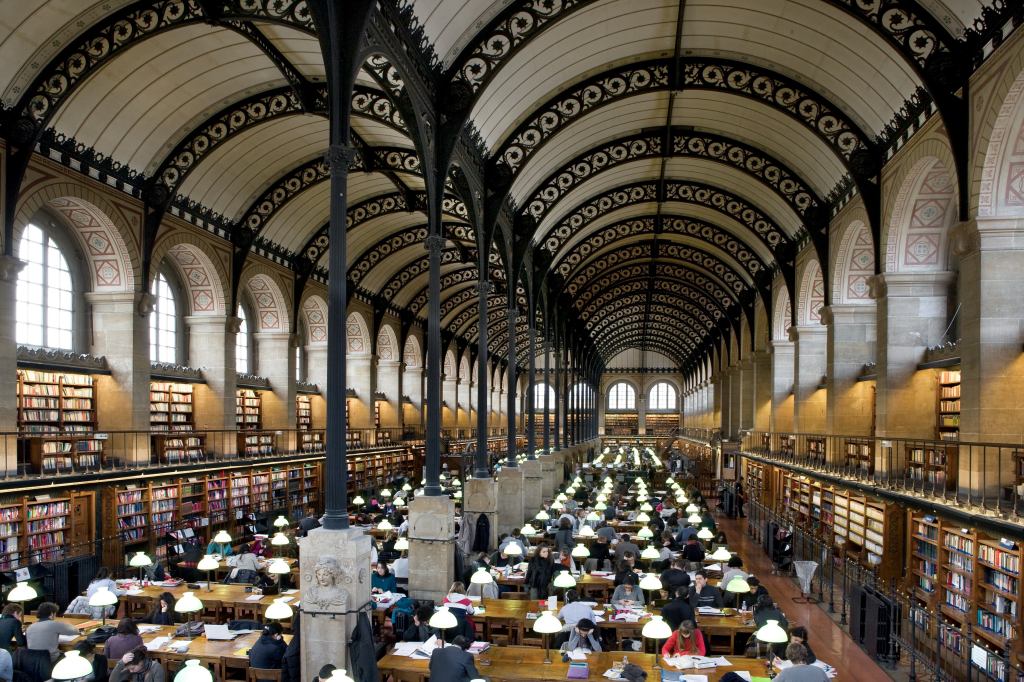
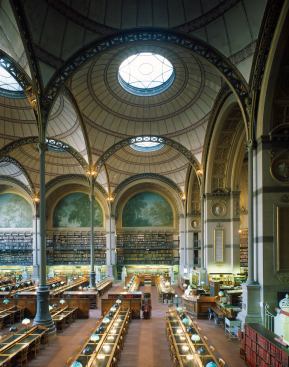
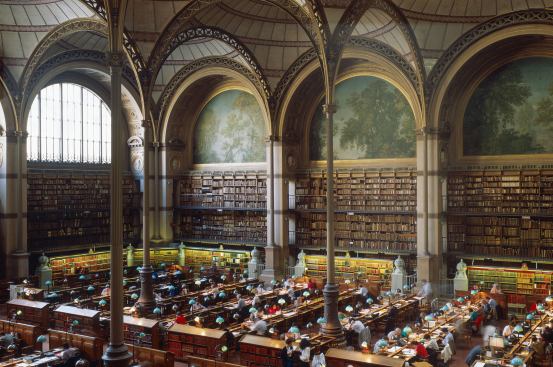
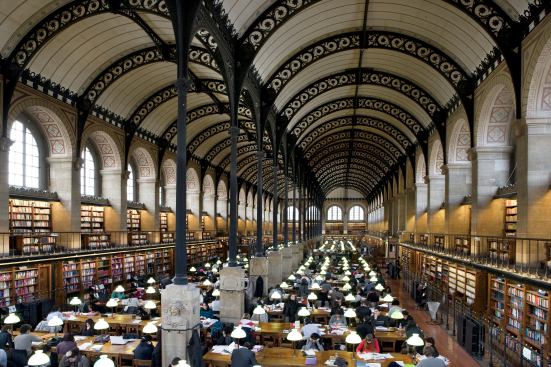
Henri Labrouste, Bibliothèque nationale, 1854-1875. Paris…
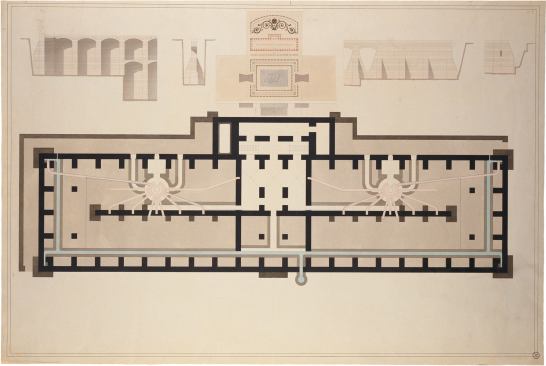
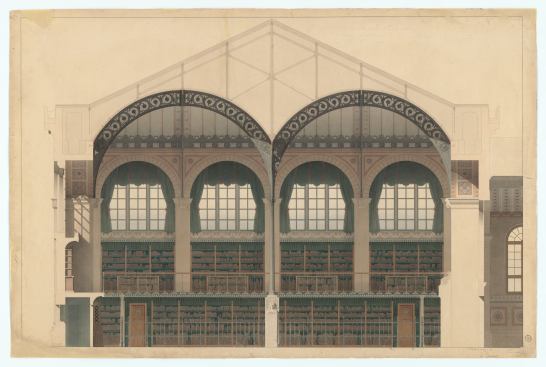
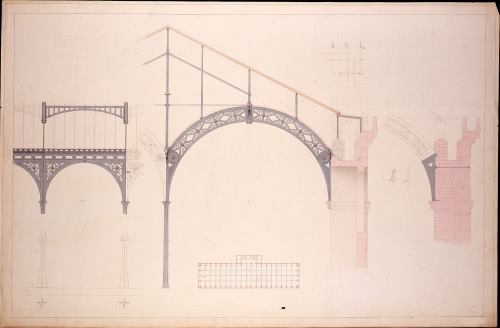
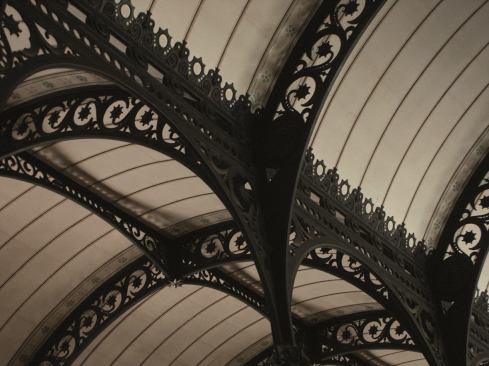
In a handsome cutaway reconstruction model that is one of the exhibit’s centerpieces, those stacks appear startlingly contemporary: six dense stories of shelves poised on a seemingly lightweight metal superstructure, accessed by meshlike metal grille walkways, skylit from above like a great 19th-century train station by vast glass panels. As revealed in the model’s cutaway, those stacks could easily be taken for a contemporary addition by the likes of, say, SANAA or SHoP.
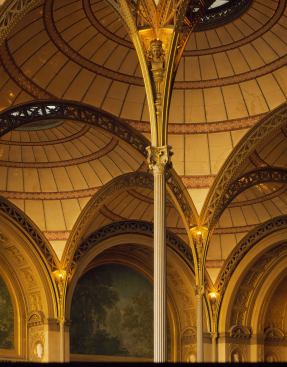
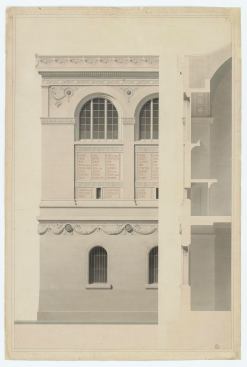
And yet this isn’t—entirely—a story of decorated stage and functional backstage: Labrouste left the proto-Miesian metal-and-glass box of those stacks clearly visible through a giant arch (framed by caryatids, no less) opening into the reading room, which also featured thin iron columns, albeit with vaguely Corinthian capitals. If successive generations of historians sought to align Labrouste to either modern or postmodern, to the avant-garde or historicist, Labrouste’s juxtapositions present a complexity in which there is, at least for him, no contradiction: steel cylinder and stone caryatid, together in startling immediacy.
For Gideon and his contemporaries, these juxtapositions were an expression of Labrouste’s heroism, his romantic and prophetic status as a designer ahead of his times. But the current exhibit tells a richer and more subtle story, situating Labrouste among a constellation of contemporaries at work on similar encounters between historical formalisms and emergent technologies. While Labrouste established a radical adjacency between classically formalist masonry and proto-modernist metal and glass, his contemporary Eugene Emmanuel Viollet-le-Duc (1814–1879) attempted an awkwardly sincere structural and formal integration of iron and stone in a kind of idiosyncratic neo-gothic—most famously in his much-published 1864 project for a vaulted assembly hall with iron vaults and masonry infill. Peers and pupils of both men, such as Anatole de Baudot (1834–1915), with his church of Saint-Jean-de-Montmartre in Paris, developed their research toward innovative applications of steel and reinforced concrete, and attempts at a formal rationalism expressive of those innovations. One could draw a credible line through this work into the designs and desires of Auguste Perret (1974–1954), and the subsequent work of Perret’s star employee, Le Corbusier.
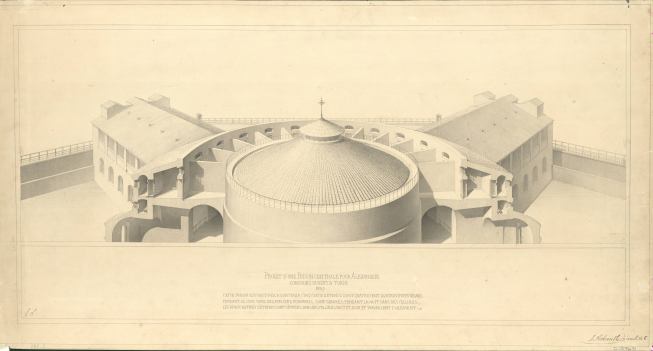
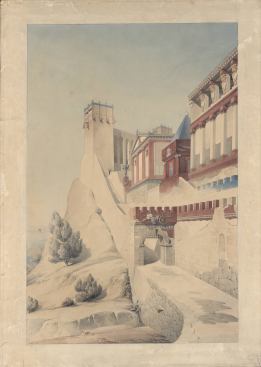
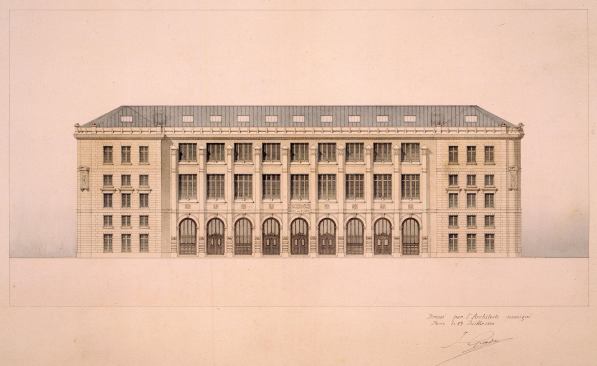
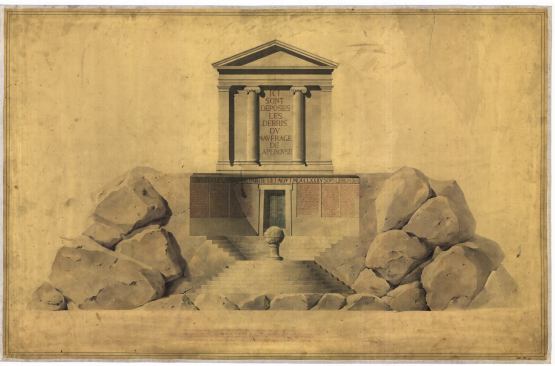
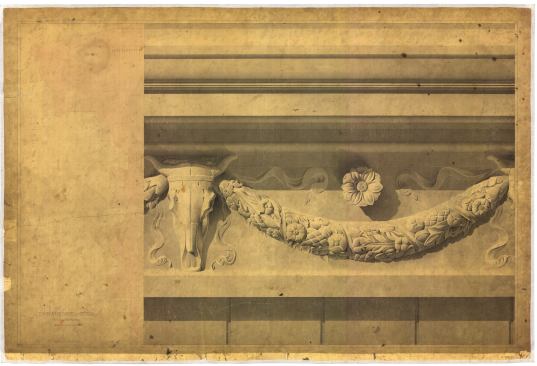
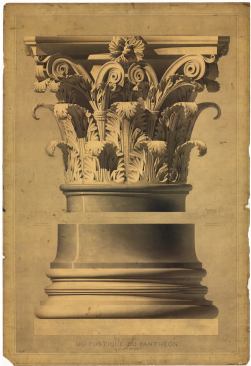
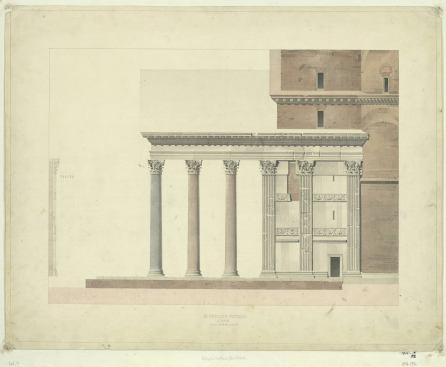
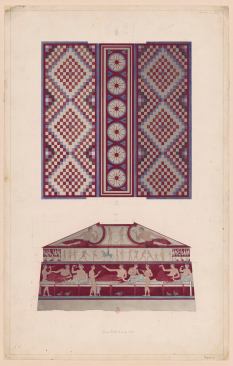
But if this elegant, erudite show situates Labrouste into a great sweep of architectural history, whose remarkable social and political reversals (from republic to kingdom to empire and back) were reflected in his polyvalent work (especially in unbuilt projects for emerging social institutions such as prisons and clinics), it also establishes a more intimate view. A long corridor back to that library model is lined by the laborious analytical drawings and preparatory sketches that Labrouste produced in Rome in the 1820s. And, in the shadow of that entrance arch, a case featuring all the well-worn tools—triangles, leadholders, erasers, quills, plumb bobs, sketchbooks—used to make them. The tools look alive and, especially in today’s industrial-artisanal age, completely modern, and like the silk Prix de Rome laurel wreath next to them, like all the work nearby, are ever new, ever strange, ever green.