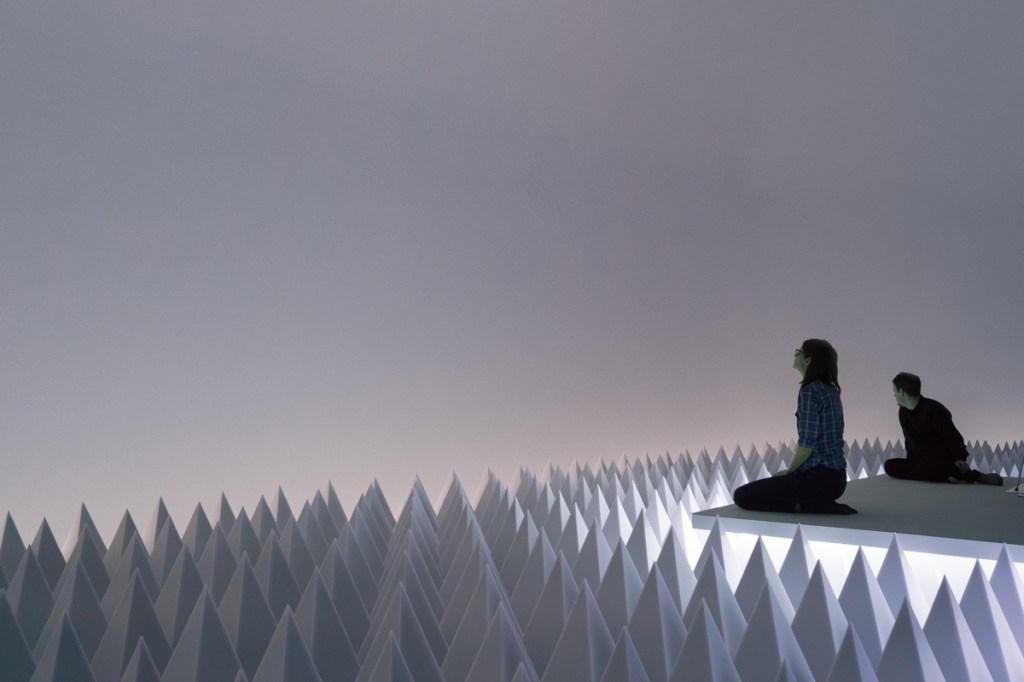
“PSAD Synthetic Desert III,” a new exhibition by American artist Doug Wheeler at the Solomon R. Guggenheim Museum, in New York—sponsored by German chemical company BASF—welcomes visitors into a semi-anechoic chamber dimly lit to create the illusion of infinite space. With a sound rating of 10 to 15 decibels (a whisper registers around 20 decibels and normal conversations at 60 decibels), the chamber is currently the quietest space in the city.
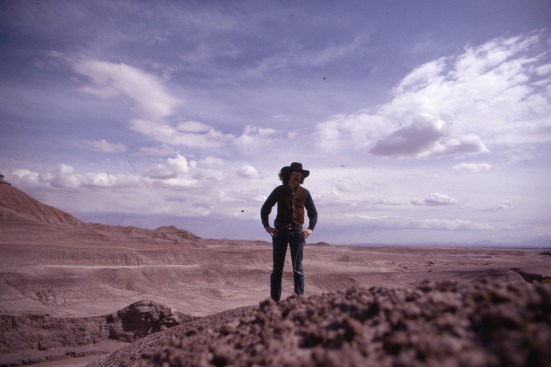
Courtesy Doug Wheeler
Doug Wheeler in the Painted Desert, Arizona, ca. 1970
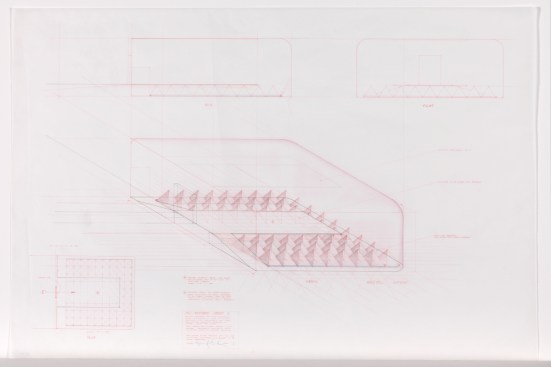
The exhibit is the first realization of a series of experimental designs conceived by Wheeler in the 1960s and ’70s. Measuring 17 feet by 54. 5 feet by 25. 7 feet, the room takes inspiration from Wheeler’s experiences in the deserts of northern Arizona, where near-silence reinforces the sense of a boundless landscape. A seemingly floating, bottom-lit platform introduces visitors into the hushed environment, whose floor is covered in 400 foam pyramids measuring 32 inches tall, and whose wall features 600 foam wedges, all made from BASF’s sound-absorbing Basotect. A recording of desert winds plays softly in the background, at 10 to 15 decibels. According to Doyle Robertson, regional business manager at BASF in North America, the human ear is accustomed to constant sound vibration, even if at extremely low levels. (Hence, we tend not to notice white noise.) Complete silence, or the absence of any vibration, could induce nausea, Robertson says.
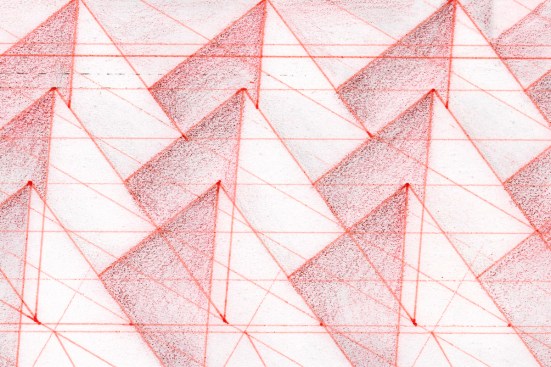
Courtesy Solomon R. Guggenheim Museum, New York/ Doug Wheeler
Basotect, the flexible, open-cell melamine foam that is featured prominently in the installation, is typically used in architectural and construction applications such as elevator cabs in skyscrapers, indoor pools, theaters, and restaurants. A thickness of “only 1 to 2 inches is enough” to ensure adequate sound absorption, Robertson says. The dramatic height and shapes of the pyramids and wedges in Wheeler’s installation is “purely aesthetic.”
“PSAD Synthetic Desert III” opened March 24 and will run through Aug. 2 at the Guggenheim in New York.
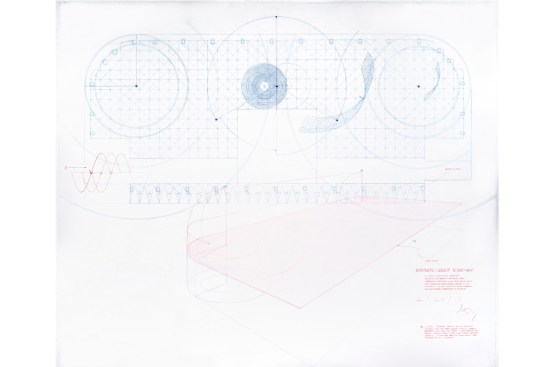
Courtesy The Guggenheim Museum
Courtesy Doug Wheeler
Synthetic Desert Sound Map, 2017