
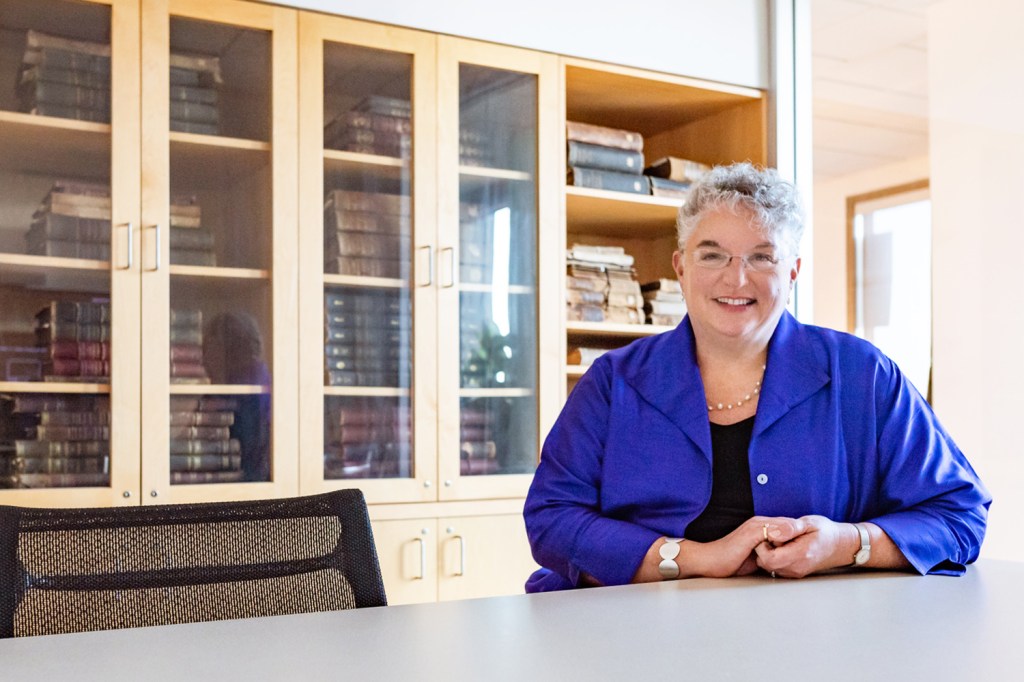
Carole Wedge, FAIA, is the winner of AIA’s 2020 Edward C. Kemper Award, which honors significant service to the organization. She has been at Shepley Bulfinch since 1986, and has served as the firm’s president since 2004. She’s seen it all economically: booms and busts, downturns and expansive growth. Through it all, she’s acquired a deep understanding of what a firm and its employees can do to thrive during the good times and survive through the bad ones. “When times get tough, remember that you’re really valuable as a problem solver,” she says, “and always stay in conversation with your clients about their needs.”
Everyone wishes their firm had a rainy day fund. For an architect, that fund would be part of their savings account. At any point, a client could call and put a project on hold. Then it gets tricky, because it becomes emotional and it involves people’s livelihoods. In a downturn, some firms want to keep everyone employed and ride it out. But then a lot of times you see those firms—who didn’t trim staff or make major course corrections—run out of capital before business picks back up.
Sometimes a crisis can let you change something that you wouldn’t change before. It can prompt strategic conversations about how you’re doing business, what you can do to be more efficient, and how to use technology in a more robust way. During the Great Recession, we focused on creating service offerings for our clients that were much more about operation and utilization. Even developers pivot; they might not invest in properties, but they’re going to buy real estate. We can help them evaluate those purchases, even if they’re not going to build for five years.
It’s mostly about being savvy about the world around you and finding new opportunities. When we rode out 2009, we reduced staff and got brutally honest with everyone who was left. We asked them to help us find smaller projects and services that would get us over the hump. And people found lots of business that got us through a rocky financial time.
The best employees have a great attitude and will do whatever needs to be done. I love someone who asks, “What can I do to help?” It provides a sense that we’re all in this together. Cutting vertically can also be an option to consider. Someone might say, “I’d love to take six months off, or I was thinking about retiring anyway.”
There have been times where we’ve asked someone to learn new software or pick up a new task and they’ve said, “I’m not interested in that.” Well, that’s a shame because it has to get done. As much as everyone wants to set their own career path, pitching in and helping goes a long way. From leadership to administrative staff, we all need to be open and willing to entertain all sorts of ideas. — As told to Steve Cimino