
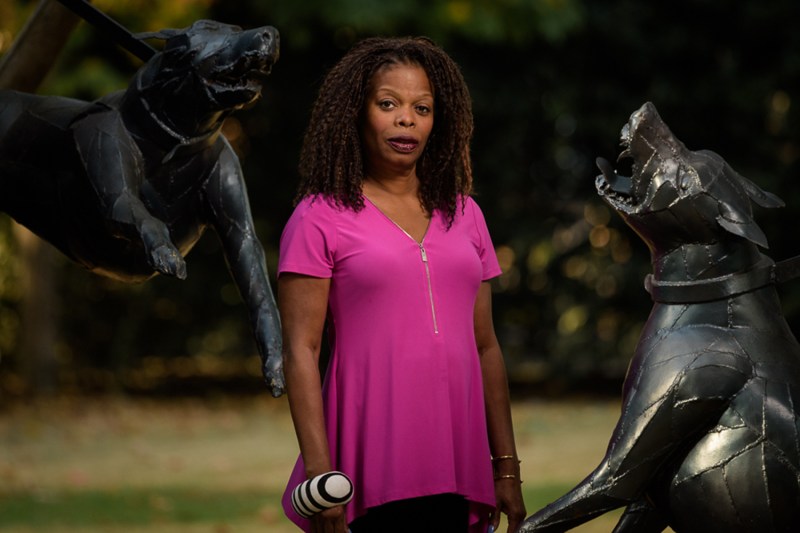
Renee Kemp-Rotan, Assoc. AIA, is the director of grants and special projects in the Office of the Mayor of Birmingham, Ala., and an urban designer who has traveled the world with an eye for architecture and social change. From studying mud-based architecture in Ghana to serving as Atlanta’s liaison on the construction of Philips Arena and Centennial Olympic Park, she’s been involved in nearly every type of building design imaginable. And it’s all thanks to an AIA television commercial that ran several decades ago in Washington, D.C.
I was at my grandmother’s house during the summer before 12th grade, and noticed a television commercial that said, “The AIA is recruiting 20 African-American students interested in majoring in architecture.” I wanted to be a fine arts painter, but my family of doctors, lawyers, and educators said, “No starving artists!” So architecture was the perfect compromise. I cannot put into words what the AIA’s diversity scholarship did for my life. Architecture opened my eyes to the world.
I trained as an architect at Syracuse University—I was actually the first black woman to graduate from there, cum laude, with an architecture degree—but when I first arrived I was asked by students and faculty alike: “What the heck are you doing here?” The Syracuse International Studies Program saved my academic career. As an African American woman, studying at the world-renowned Architectural Association in London for two years was life-altering. European culture was much more diverse, with more design opportunities than I would have ever imagined.
Ending up in Birmingham—after years in Atlanta as director of economic development and then chief of urban design and urban development—has given me an opportunity give back to diversity from the center of the civil rights movement. I came here to pay my respects to the memory of those who desegregated schools and helped me earn the opportunity to go to Syracuse.
My first major project was as director of master planning for Birmingham’s Railroad Park. In the 1960s, the city was segregated; [then-Commissioner of Public Safety] Bull Connor shut down 61 public parks after Brown v. Board of Education so he would not have to desegregate them. Fifty years later, we now have 3,000 renters, a new baseball park, the Negro Leagues Baseball Museum, and the Rotary Trail as a result of this park, in this city where playing sports in a segregated park was once a life-threatening proposition.
And I’m here because of one AIA television commercial, one AIA scholarship, and one profession: architecture, the beloved mother of all sciences. —As told to Steve Cimino