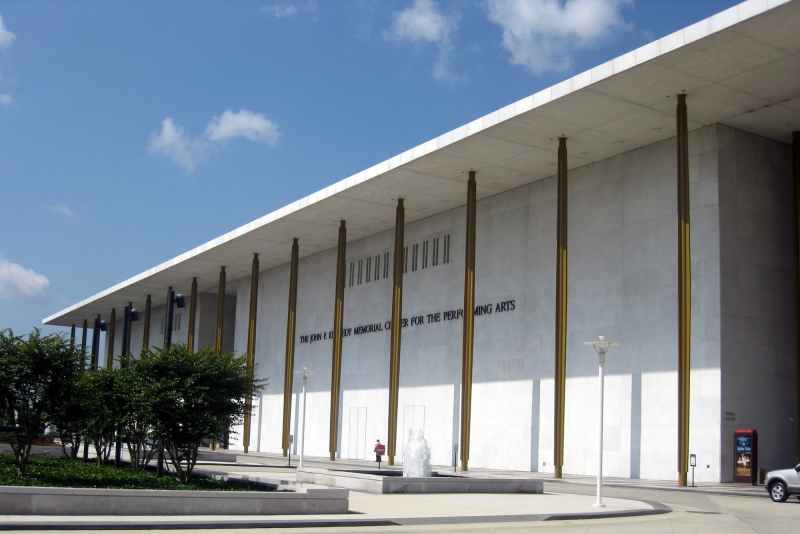
We are witnessing a systematic attack on our national heritage, where historic sites and cultural landmarks, owned by We, The People, are in danger of outright destruction at any moment, on a whim. Congress must act quickly to prevent the damage we witnessed at the White House’s East Wing from happening anywhere else, including at the John F. Kennedy Center for the Performing Arts.
While the Kennedy Center is not designated a National Historic Landmark (NHL). the White House and about 2,600 other properties are. Distinct from the 95,000-plus properties on the National Register, NHLs are of exceptional historic and cultural importance and not meant to be subject to whims.
Beginning July 4 of this year, according to a lengthy social media post, the Kennedy Center is expected to undergo a project of “Construction, Revitalization, and Complete Rebuilding.” This unilateral decision by the current administration purports to result in a “new and spectacular Entertainment Complex … the finest … of its kind, anywhere in the World.” No details are provided, nor have designs or plans been publicly shared.
As with the iconic White House edifice, this arts complex is part of our shared national identity. Congress should control its future and must act immediately to put a stop to Executive Branch vagaries.
Initiated by Congress, the bipartisan idea of a national cultural center was signed into law in 1958 by Dwight Eisenhower. President Kennedy himself made securing the necessary private funding a priority. Later Congress enacted a renaming of the modernist building by architect Edward Durell Stone and surrounding campus as The John F. Kennedy Center of the Performing Arts, establishing the center as a living memorial.
As an expert in historic preservation, I know that both public review and approval from Congress are required before the kinds of changes the President has announced can even be considered, much less commenced. But this White House does not abide by the constitutional separation of powers, and the current occupant of the Oval Office is known to demolish important cultural edifices when it suits.
In the last year, the White House has terminated Kennedy Center officers to wrest control of the nonpartisan Board, “appointed” the president as the center’s Board chairman, added his name to the building, and dissolved the center’s social impact initiative, all amid cancelations by esteemed performers and plummeting ticket sales. Now comes the ruling by a federal judge against the suit brought by preservationists, clearing the way for construction of a massive ballroom on the site of the now-demolished East Wing.
Following that demolition, no one should doubt that the White House might swing a wrecking ball in the direction of the Kennedy Center, even with the president’s name recently hung on it. The closure and possible demolition would be merely the latest in a long line of unilateral moves by the administration to fundamentally alter our understanding of our culture, history, and heritage.
Some argue that Stone’s design for the center was widely critiqued at the time of its construction, and therefore its historical importance is questionable. But it doesn’t matter what was once controversial, or whether a monument is universally beloved. No one has asked for the White House to rewrite history or affix the president’s imprimatur to We, The People’s cultural heritage. Further, the center has already on several occasions received renovations and updates, and is considered one of the finest performing arts venues in the world. It serves contemporary purposes superbly, and can certainly do so for future uses.
The threat to the Kennedy Center coming from the White House — and threats to other historic sites representing our shared cultural heritage — demands a speedy and unequivocal response. At this time, our leaders in both parties are abdicating their duty and missing an opportunity to demonstrate the importance of the Kennedy Center and the legacy it represents.
Congress must act.
The views and conclusions from this author are not necessarily those of ARCHITECT magazine.