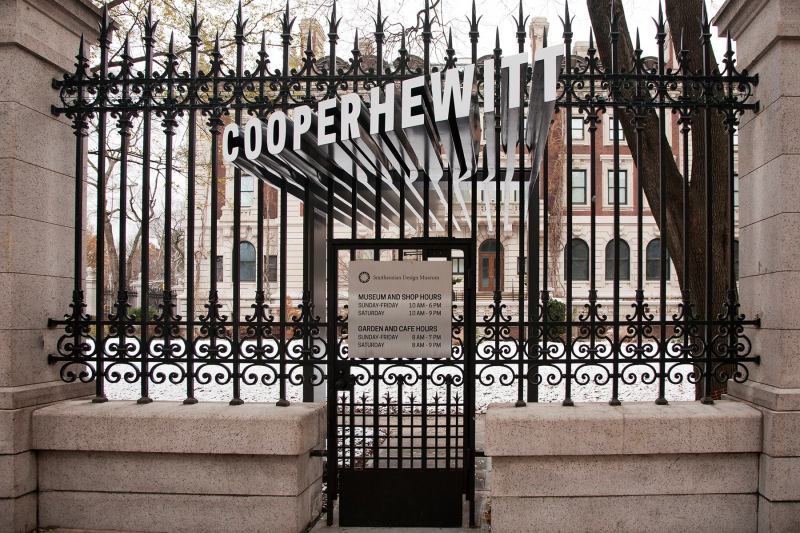
For much of the past decade, American design culture has oscillated between two poles: hyper-polished aesthetics on one end, and abstract systems-thinking on the other. The 2026 National Design Awards, announced by Cooper Hewitt, Smithsonian Design Museum, suggest a different synthesis—one in which design is neither a surface nor a theory, but a civic practice embedded in daily life, politics, climate, labor, and memory.
Launched in 2000 under the White House Millennium Council, the National Design Awards have long served as a barometer of where American design believes its moral center lies. This year’s winners—spanning architecture, interiors, fashion, digital design, landscape, and product—are united less by style than by stance. Their work insists that design is a public act, one that redistributes power, makes inequities legible, and reclaims beauty as a shared resource rather than a luxury commodity.
As Cooper Hewitt director Maria Nicanor has framed it, design here operates as a civic force—reflecting collective values while shaping everyday experience. Together, the honorees form a portrait of American design not as a market category, but as a cultural infrastructure.
Below, a closer look at each of the 2026 National Design Award winners—and why their work matters now.
Design Visionary: Robert Earl Paige
Design as access, not aspiration
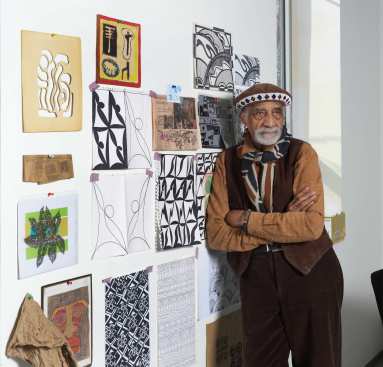
Robert Earl Paige in his Hyde Park Art Center Studio in 2021. Photo: Tom van Eynde
Robert Earl Paige’s career unfolds as a quiet rebuke to the notion that innovation must announce itself loudly. Working across art, craft, fashion, interiors, and education, Paige has spent decades dissolving the hierarchies that separate “high” design from everyday life. His practice—rooted in repurposing, color, and material improvisation—treats design not as an object to be consumed, but as a process to be shared.
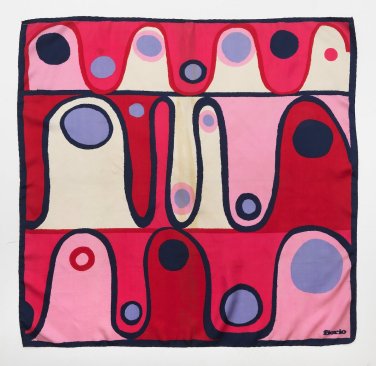
Robert Earl Paige, Homage to Milano. Silk-screen-printed scarf; 30 x 31 inches (1964). Photo: Tom van Eynde. Courtesy of Hyde Park Art Center
In the 1970s, his Dakkabar Collection translated West African textile traditions into home furnishings sold through Sears, placing Black visual culture into the domestic mainstream at a scale few designers have matched. Long before “circular design” entered the lexicon, Paige was transforming cardboard, paper, and found fibers into objects that invited curiosity rather than reverence. As an educator and participant in the Black Arts Movement, his work insists that accessibility is not a compromise of quality, but its ethical foundation.
Climate Action: Estudio Teddy Cruz + Fonna Forman
The border as a laboratory for climate justice
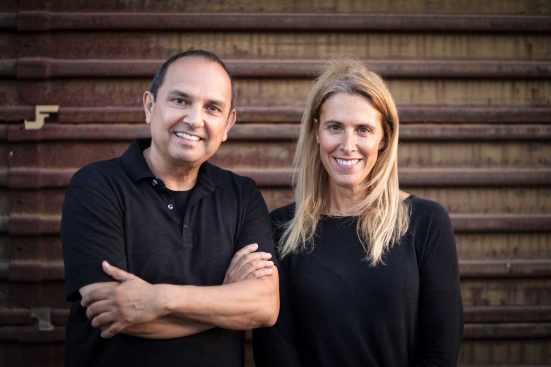
Left: Teddy Cruz. Right: Fonna Forman. Photo: Courtesy of Estudio Teddy Cruz + Fonna Forman
The UCSD Community Stations project reframes climate action as a civic infrastructure rather than a technical fix. Distributed along the U.S.–Mexico border, these stations operate simultaneously as research hubs, cultural venues, and community spaces—designed in close partnership with local organizations on both sides of the wall.
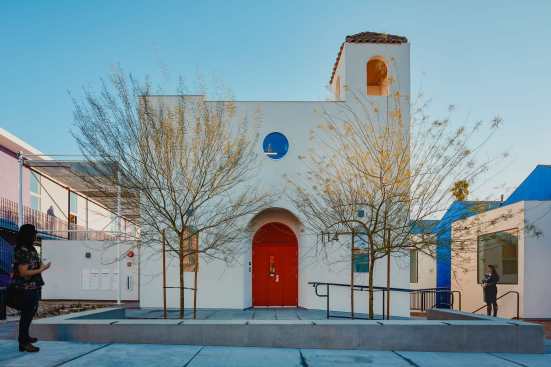
Estudio Teddy Cruz + Fonna Forman, UCSD-Casa Community Station. The adapted reuse of a historical church as a community theater anchors this station, giving shape to Living Rooms at the Border, an affordable housing pilot project in San Ysidro, California, co-developed with the NGO Casa Familiar, to explore the intersection of social housing, public space, and participatory climate education (San Diego, California, 2020). Photo: Stephen Whalen
Led by Estudio Teddy Cruz + Fonna Forman, the initiative treats migration, housing, ecology, and governance as interdependent systems. Architecture here is not a finished object but a platform for dialogue, adaptation, and collective agency. By embedding university resources directly into border communities, the project challenges the extractive tendencies of academic research and models a more reciprocal form of design practice—one capable of responding to climate vulnerability with social intelligence.
Emerging Designer: Mattaforma
Building with forests, not fantasies
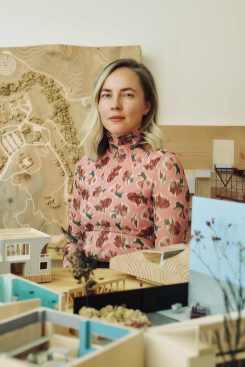
Lindsey Wikstrom. Photo: Guarionex Rodriguez
Founded by Lindsey Wikstrom, Mattaforma represents a new generation of architectural practice grounded in material ethics and local knowledge. The studio’s work begins not with renderings, but with field research—mapping nearby forests, quarries, and farms to understand the ecological and cultural histories embedded in materials.
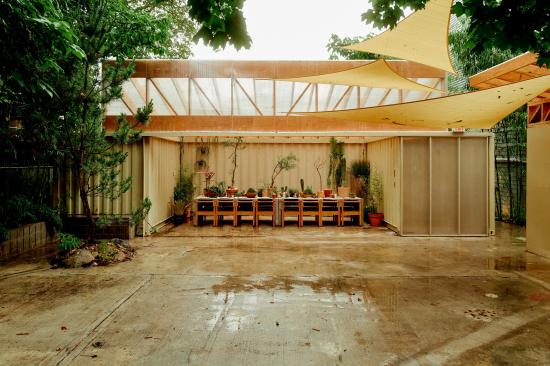
Mattaforma, The Nursery at Public Records is a community space that celebrates the spontaneous. Functioning as a music venue during the summer and a nursery for plant life during the colder months, The Nursery is designed to be deconstructed and reconstructed, extending the material lifespan of all off-the-shelf elements used (Brooklyn, New York, 2023). Landscape Architecture: Cactus Store, Acoustics: Arup, Interior Design: Space Exploration, Sound System: OJAS and NNNN. Photo: Ill Gander
Specializing in mass-timber construction and plant-based systems, Mattaforma designs buildings meant to be disassembled, reused, and reimagined over time. Their projects—ranging from rapid-build pavilions to open-air classrooms—often shift program seasonally, blurring distinctions between architecture, landscape, and infrastructure. Through writing, teaching, and advocacy, the studio makes climate action tangible, communal, and surprisingly joyful.
Architecture: Frida Escobedo Studio
The politics of simplicity

Frida Escobedo. Photo: Alex Trebus
Frida Escobedo Studio has built an international reputation by doing something increasingly rare: using restraint as a critical tool. Across scales and geographies, the practice employs simple forms to surface complex forces—colonial histories, social rituals, material economies—that shape public space.
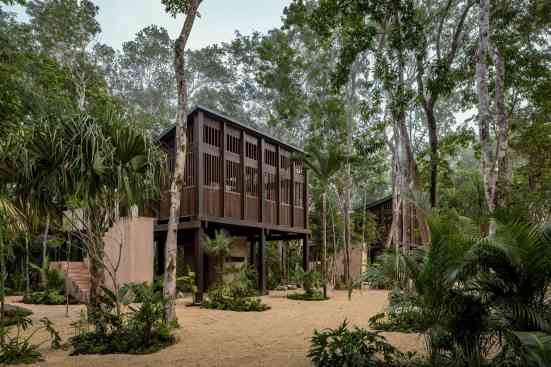
Frida Escobedo Studio, Boca de Agua. Boca de Agua is a sustainable hotel comprising 22 FSC-certified wood stilt–elevated villas and an integrated wildlife corridor that keeps 90 percent of the site’s natural habitat intact (Bacalar, Quintana Roo, Mexico, 2023). Photo: César Béjar
Whether designing permanent buildings or temporary installations, Escobedo’s work resists spectacle in favor of resonance. Recent high-profile commissions—including major museum and civic projects—underscore how her approach translates across contexts without losing its ethical clarity. The studio’s architecture suggests that the most powerful spatial experiences often emerge not from excess, but from attention.
Communication Design: Thought Matter
Designing public meaning
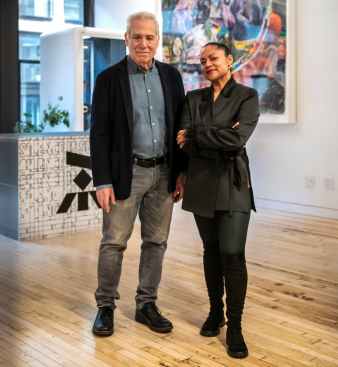
Left: Tom Jaffe. Right: Jessie McGuire. Photo: Courtesy of Thought Matter.
Thought Matter operates where graphic design meets civic life. Since its founding in 2015, the studio has specialized in translating dense cultural, political, and institutional narratives into forms that invite participation rather than passive consumption.
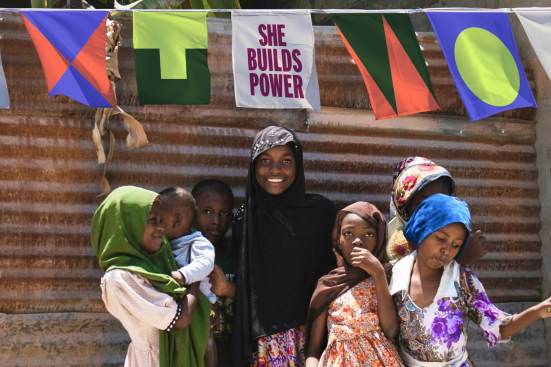
Thought Matter, She Builds Power – Earth Island Institute. A bold identity and new name uplifted the multifaceted organization, elevating women’s leadership, boosting agency and resources, and instilling pride across communities in sub-Saharan Africa (2025–ongoing). Photo: Courtesy of Thought Matter
Working with museums, advocacy groups, and public organizations, Thought Matter treats communication as a shared civic space—one shaped through collaboration and listening. Their projects reveal how design can reframe narratives, surface overlooked histories, and activate publics without resorting to didacticism or branding clichés.
Digital Design: Laura Kurgan
Making power visible through data

Laura Kurgan. Photo: Courtesy of Kris Krüg
Laura Kurgan has spent decades proving that data is never neutral—and that design is essential to understanding its consequences. Trained as an architect, she pioneered the use of spatial computation, GPS, and satellite imagery to expose structural injustice, from incarceration geographies to migration flows.

Laura Kurgan, The Brain Index. An initiative for the public communication of science at the Mortimer B. Zuckerman Mind Brain Behavior Institute at Columbia University, this project translates images produced by scientists at the institute into a visual language accessible to a diverse audience (Jerome L. Greene Science Center, Columbia University, New York, 2017–2022). Project team: Mark Hansen; Laura Kurgan; Jochen Hartmann (project lead, CSR); Madeeha Merchant (graduate research assistant, CSR); Mondrian Hsieh (graduate research assistant, CSR). Image: Courtesy of Laura Kurgan
Her work bridges research, pedagogy, and exhibition, insisting that critical engagement with digital tools is a prerequisite for social justice. As an educator, she has helped shape a generation of designers fluent not only in technology, but in the politics embedded within it.
Fashion Design: Josh Tafoya
Reclaiming the Southwest
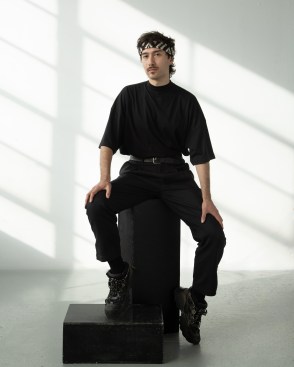
Josh Tafoya. Photo: Bonny Melendez
Josh Tafoya’s work challenges the sanitized myths of “Southwestern” style by re-centering Indigenous knowledge and lived experience. Drawing on his Genizaro, Spanish, and Chicano heritage, Tafoya’s textiles and garments combine ancestral weaving traditions with a raw, contemporary sensibility.

Josh Tafoya, Look from Spring/Summer 2024 Collection, Chola. Inspired by the lowrider culture of the American Southwest, Chola is a love letter to the many ethnic heritages and mixture of cultures of New Mexico (2024). Photo: Courtesy of Josh Tafoya
After returning to New Mexico to launch his practice, Tafoya positioned fashion as a site of cultural continuity rather than trend cycles. His work demonstrates how craft can operate as both preservation and innovation—anchored in place, yet forward-looking.
Interior Design: Charlap Hyman & Herrero
Interiors as memory machines
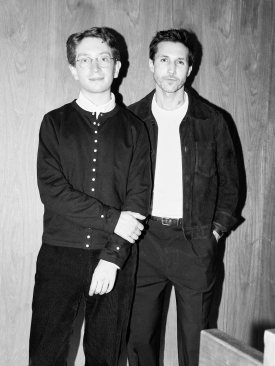
Charlap Hyman & Herrero treat interiors not as backdrops, but as narrative spaces shaped by memory, performance, and cultural residue. Working across architecture, exhibitions, retail, and set design, the firm blurs disciplinary boundaries with ease.
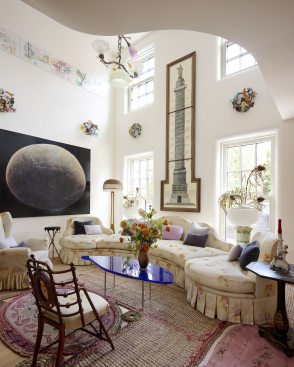
Charlap Hyman & Herrero, Clinton Hill Townhouse. Exuberant finishes and furnishings refer to the building’s Victorian origins through period-appropriate pieces and bespoke commissions from contemporary artists. In the living room, the collection is curated as an homage to Gertrude Stein (Brooklyn, New York, 2024). Project partner: GRT Architects. Photo: Jason Schmidt
Their interiors are unapologetically expressive, yet deeply researched—drawing on historical references without nostalgia. By engaging the hidden histories of spaces, the practice expands what interior design can be: not decoration, but storytelling through material and form.
Landscape Architecture: Ten Eyck Landscape Architects
Healing through ecology

Christine Ten Eyck. Photo: George Brainard
For nearly three decades, Ten Eyck Landscape Architects has practiced a form of landscape architecture rooted in care—care for ecosystems, communities, and regional histories. Working primarily in the American Southwest, the firm prioritizes native species, water stewardship, and sensory richness.
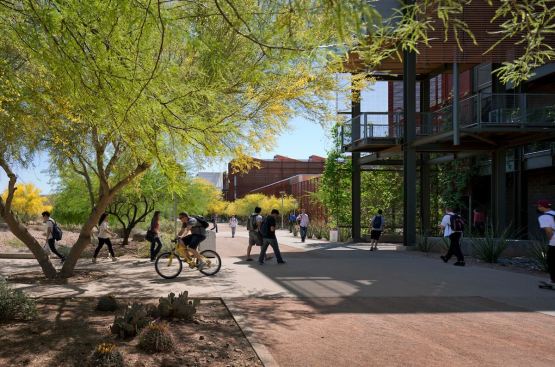
Ten Eyck Landscape Architects, Arizona State University Polytechnic. A robust design initiative to transform the former Air Force base into an accessible, shade-forward, and sustainably designed environment, ASU Polytechnic is designed to protect the campus from seasonal flooding and allow outdoor student life to flourish (Mesa, Arizona, 2009). Project partners: Lake | Flato Architects; RSP Architect of Record; Aqua Engineering; DPR General Contractor; Grounds Control Landscape Contractor. Photo: Bill Timmerman
Their landscapes transform overlooked or damaged sites into spaces of collective belonging. Beauty here is not ornamental; it is ecological resilience made visible and shared.
Product Design: Berea College Student Craft
Learning by making, equitably
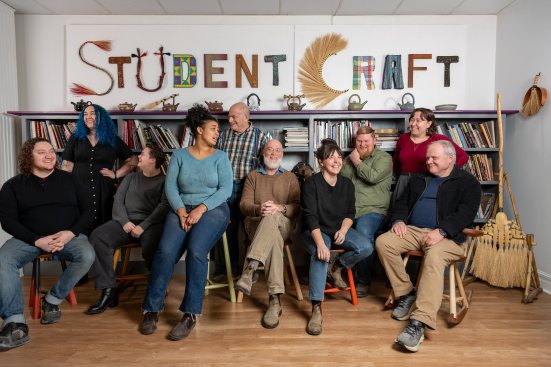
From left to right: Hunter Elliott, Director of Fellowships; Erin Miller, Director of Weaving and Assistant Creative Director of Student Craft; Emerson Croft, Weaving Manager; Cleo Lewis, Woodcraft Manager; Steve Davis-Rosenbaum, Director of Outreach; Aaron Beale, Associate Vice President of Student Craft; Amanda Lee Lazorchack, Director of Weaving; Rob Spiece, Director of Woodcraft and the Woodworking School at Pine Croft; Katie Bister, Pine Croft Manager; Philip Wiggs, Director of Ceramics. Photo: Courtesy of Berea College Student Craft
Berea College Student Craft stands apart from conventional product design studios by placing education at its core. As part of the college’s tuition-free work program, students from all disciplines design, prototype, and produce thousands of objects annually—often without prior formal training.
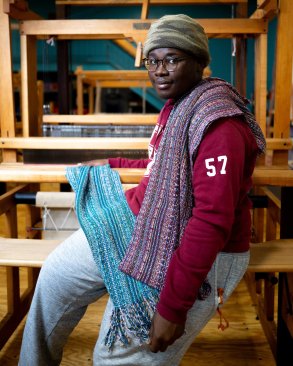
Berea College Student Craft, Leeroy Mabvuta with Symphony Scarves. Cotton, bamboo, tensel; 80 x 11 inches. Designed by Leeroy Mabvuta, this scarf features a treadle pattern that is a translation of the melody of “A Beautiful Noise” by Alicia Keys and Brandi Carlisle into a woven design. The scarf collection urges everyone to use their voice and express their identity and values (2023). Designer: Leeroy Mabvuta. Photo: Sean Hall
The program treats making as a form of intellectual inquiry, where failure is not penalized but expected. In an era of automation and abstraction, Berea’s model reasserts the value of hands-on knowledge and material literacy as democratic skills.
A Broader Shift
Taken together, the 2026 National Design Award winners signal a recalibration of values. This is design less interested in novelty than in consequence; less focused on authorship than on agency. It is design that understands itself as part of civic life—messy, contested, and indispensable.
As Cooper Hewitt prepares to expand public programming and open its sweeping “Design Across Time” installation this summer, the message is clear: design’s future will not be decided by style alone. It will be shaped by those willing to engage the world as it is—and to design toward what it could be.