In a profession long obsessed with singular genius and skyline spectacle, The Architectural League of New York’s 2026 Emerging Voices winners make a different argument: the future of architecture will be collective, climate-conscious, and deeply rooted in place.
The League announced the eight recipients of its biennial Emerging Voices competition this week, honoring practices whose work “resourcefully employs architectural thinking to address contemporary concerns”—from climate change and resource extraction to housing inequity and exploitative labor practices. More than a showcase of promising talent, the award has become a bellwether for where the discipline is headed.
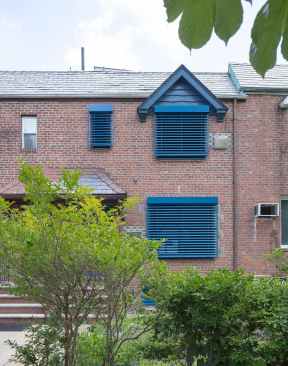
CO Adaptive, Tiny Queens Passive House, Queens, NY, 2023. Courtesy Naho Kubota.
Since its founding in 1982, Emerging Voices has identified more than 300 North American designers who went on to shape architecture’s intellectual and built landscape. The alumni roster reads like a compressed history of late-20th- and early-21st-century practice, including Steven Holl, Thom Mayne, Toshiko Mori, Jeanne Gang, Tatiana Bilbao, Kate Orff, and most recently Emanuel Admassu and Jen Wood. The implication is clear: today’s “emerging” voices often become tomorrow’s defining ones.
But the tenor of this year’s cohort suggests a shift. If the 1990s and 2000s rewarded formal bravura and iconic authorship, the 2026 class foregrounds engagement over ego.
Susan T. Rodriguez—founder of Susan T Rodriguez | Architecture · Design and a member of the League’s board—served on the jury and described the winners as practices centered on “community engagement, materiality, housing, and transforming existing structures.” Rather than parachuting in with abstract solutions, the selected firms presented portfolios grounded in specific urban and rural contexts, addressing “tangible challenges” where they actually practice.
In other words: less spectacle, more specificity.
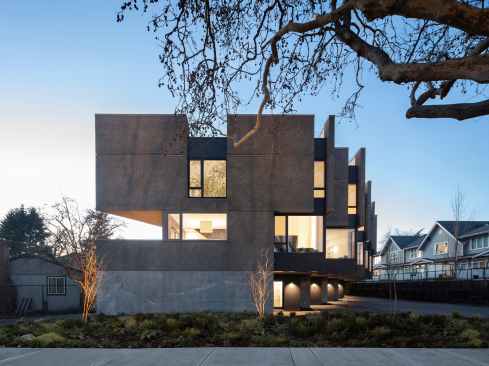
D'Arcy Jones Architects. Pearl Block, Victoria, BC, 2021. Courtesy Ema Peter.
Fellow juror Isabel Abascal, co-founder of LANZA Atelier and herself a 2023 Emerging Voices winner, framed the cohort in existential terms. The 2026 honorees, she noted, share “a clear awareness of our shared ecological crisis” and treat architecture as “a collective process shaped by a broad range of stakeholders.” Adaptive reuse, vernacular construction methods, and educational initiatives recur across the winners’ work—signals that environmental responsibility is no longer a niche concern but the discipline’s baseline.
The jury—comprising Abascal alongside Irene Cheng, Felecia Davis, David Godshall, Mae-ling Lokko, Ana Miljački, Miriam Peterson, Rodriguez, and critic Kate Wagner—conducted a two-stage review process evaluating not only realized projects but also academic contributions, advocacy, and public-facing work. The criteria underscore a broader understanding of architectural impact: buildings matter, but so do research, pedagogy, and civic engagement.
At a moment when architecture schools debate relevance, developers chase margins, and cities confront escalating climate risks, the Emerging Voices program reads less like an award and more like a manifesto. The profession’s next leaders, it suggests, won’t be defined by signature silhouettes—but by how deftly they navigate the intertwined crises of carbon, capital, and community.
For a discipline often accused of lagging behind the cultural moment, this year’s Emerging Voices make a pointed claim: architecture’s future will be measured not by height or hype, but by responsibility
Emerging Voices 2026
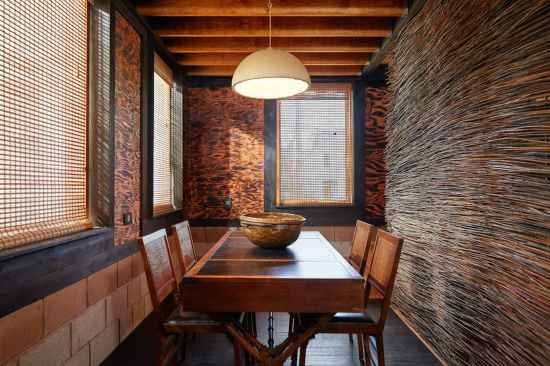
B L D U S, Grass House, Interior, Washington, DC. 2019. Courtesy Ty Cole.
Jack Becker, Andrew Linn
B L D U S Washington, DC
Jack Becker and Andrew Linn founded B L D U S in Washington, DC, in 2013. The firm’s housing-focused portfolio includes renovating historic structures in southeast Washington, DC, and building infill housing in historically neglected areas of the federal district. Across projects, B L D U S prioritizes the use of natural materials both local, like oak and black locust, and renewable, such as cork and bamboo, to create “healthy domestic architecture fit for the Mid-Atlantic climate,” in their own words. This focus on unconventional building materials draws on the firm’s expertise across fields and trades, including architecture, development, and carpentry.
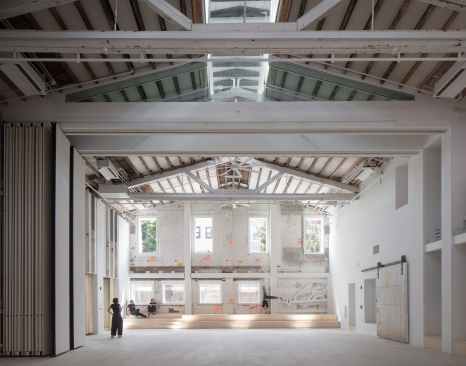
CO Adaptive, TImber Adaptive Reuse Theater, Brooklyn, NY, 2021, Courtesy Naho Kubota.
Bobby Johnston, Ruth Mandl,
CO Adaptive Brooklyn, NY
New York City–based design firm CO Adaptive’s work spans adaptive reuse and retrofits of residential, creative, and civic spaces with a focus on circularity—preserving and repurposing preexisting building materials in renovation projects. Founded in New York City in 2011 by Bobby Johnston and Ruth Mandl, the firm has progressively expanded its scope to include construction, deconstruction, and material salvage with the establishment of CO Adaptive Building and CO Adaptive Disassembly, reflecting their belief that “bridging disciplines is essential to effecting change,” in their own words.
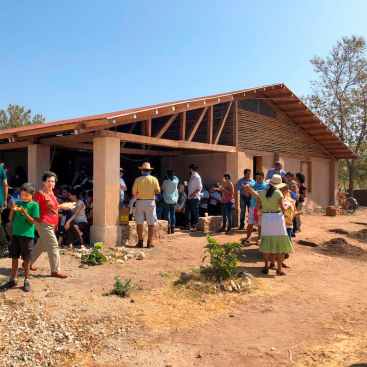
Cooperación Comunitaria, Center of Arts and Crafts of Bajareque Ceren, Ixtepec City, Mexico, 2019. Courtesy Cooperación Comunitaria.
Isadora Hastings García, Gerson Huerta García, José Jesús Álvarez Gutierrez, Silvia Elis Martínez Hernández, Lizet Zaldivar López
Cooperación Comunitaria Mexico City, Mexico
Cooperación Comunitaria works with rural Mexican communities to rebuild homes and communal facilities after natural disasters. Inviting community participation throughout the design process and integrating local ancestral knowledge with technical expertise, Cooperación Comunitaria’s practice is oriented toward “recognizing inhabitants as rights-holders and prioritizing self-management of territory, housing, livelihoods, and natural common goods,” in the firm’s own words. Founded in 2012 by Isadora Hastings García and Gerson Huerta García, the practice today includes Silvia Elis Martínez Hernández, José Jesús Álvarez Gutiérrez, and Lizet Zaldivar López.
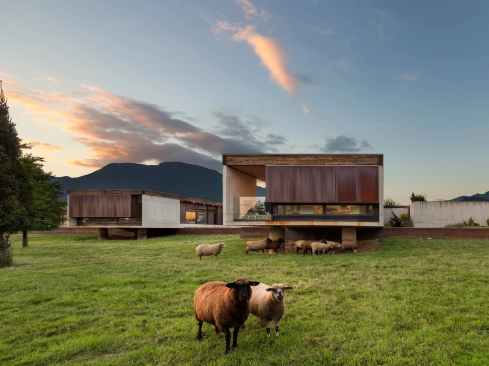
D'Arcy Jones Architects. Ha-ha Housebarn, Agassiz, BC, 2012. Courtesy Sama Jim Canzian.
D’Arcy Jones D’Arcy
Jones Architects Vancouver, Canada
Led by D’Arcy Jones, design firm D’Arcy Jones Architects has developed an expansive portfolio ranging from single and multi-family residential projects and commercial spaces to arts and cultural projects across urban and rural areas of British Columbia. Jones founded the practice in 1999 in Vancouver, Canada. Distinguished by their formal invention and deep commitment to craft, the firm seeks to ask “how habit, function, construction, beauty, and even chance shape the spaces we make,” in their own words.
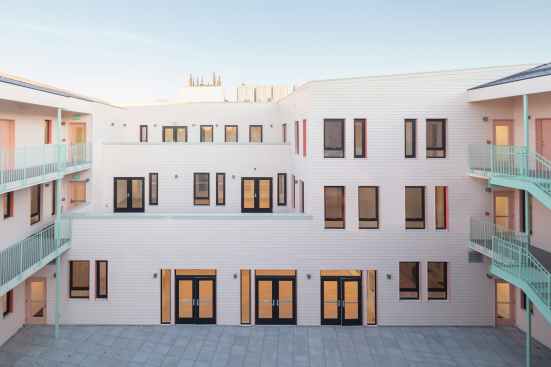
French 2D, Bay State Cohousing, Maiden, MA, 2023. Courtesy Naho Kubota.
Anda French, Jenny French
French 2D Boston, MA
Founded in Boston by Anda French and Jenny French in 2012, French 2D’s work spans large-scale multi-family and micro-housing projects, public infrastructure, and cultural institutions. The firm employs what they call “strange housing types” across residential developments and installations, which challenge familiar domestic ideas through radical organizations and typologies. In their own words, French 2D’s work is grounded in “the pursuit of new forms of collective resilience, with a focus on the social consequences of material, thermal, and formal effects.”
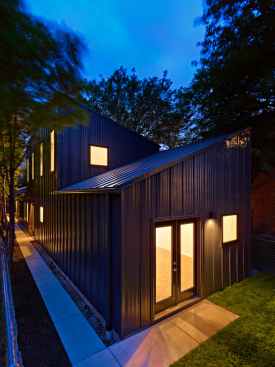
Future Firm, Hem House, Chicago, IL, 2021. Courtesy Daniel Kelleghan.
Ann Lui, Craig Reschke, Linda Chávez Baca
Future Firm Chicago, IL
Ann Lui and Craig Reschke founded Future Firm in Chicago in 2015, and Linda Chávez Baca joined the firm as a principal in 2023. Working closely with mission-driven non-profits, community residents, and small-business owners, the firm’s portfolio includes residential projects, arts and culture venues, public installations, and makerspaces. Believing that, in the firm’s own words, “architecture is both a tool for imagining and a means for building the world we want to live in,” Future Firm’s work seeks to expand the traditional scope of architectural practices, from raising capital and political will to proposing zoning amendments.
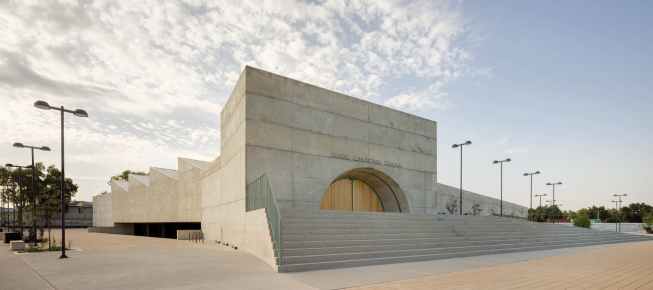
g3arquitectos, and Anonimous, Centro de Desarrollo Comunitario de Tizayuca, MExico, 2024. Courtesy Rafael Gamo.
Juan Alfonso Garduño Jardon, María de los Ángeles Garduño Jardon
g3arquitectos Querétaro, Mexico
Founded in Querétaro in 1997 by Juan Alfonso Garduño Jardón and María de los Ángeles Garduño Jardón (with Armando González Medina, who later departed the practice), g3arquitectos has developed a significant portfolio of civic and residential projects in the central Mexican region. The firm states that architecture and urban design must “actively contribute to the construction of a more humane and balanced living environment.” In addition to built projects, g3arquitectos has led urban strategy research to improve the quality of life in Querétaro’s marginalized communities and hosts Casa de Arquitectura, an architecture conference that connects Querétaro to the international design community.
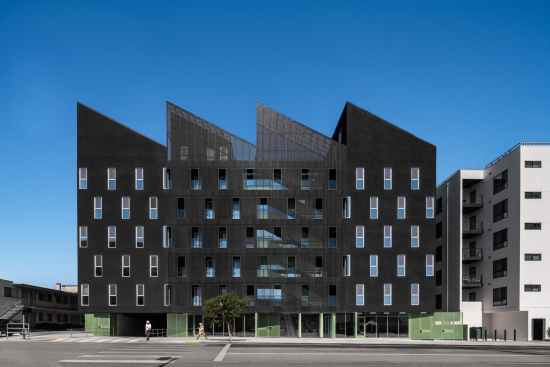
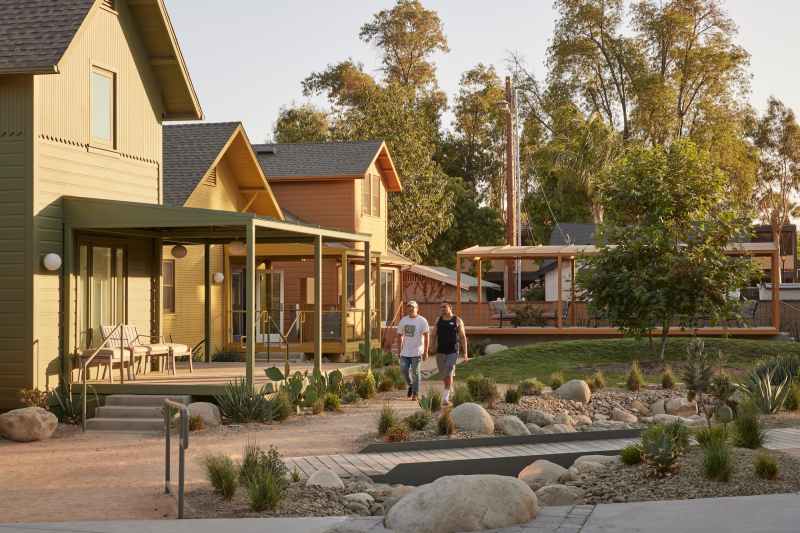
Hopson Rodstrom Design Co, The Jagger, Los Angeles. CA, 2023. Courtesy Paul.Vu, Here and Now Agency.
Nick Hopson, Klara Rodstrom Hopson
Rodstrom Design Co. Los Angeles, CA
Hopson Rodstrom Design Co. focuses on a wide range of housing typologies, including single-family, multi-family, transitional housing, and community spaces at a variety of scales. With each design, Hopson Rodstrom Design Co. aims to balance playfulness with sincerity through creative use of material, color, light, and texture. Founded in Los Angeles in 2015 by Nick Hopson and Klara Rodstrom and primarily working in Southern California, the firm’s work is shaped by local context and stakeholders and guided by the belief in “the power of dialogue, collaboration, and respect for diverse experiences and perspectives,” in the firm’s own words.