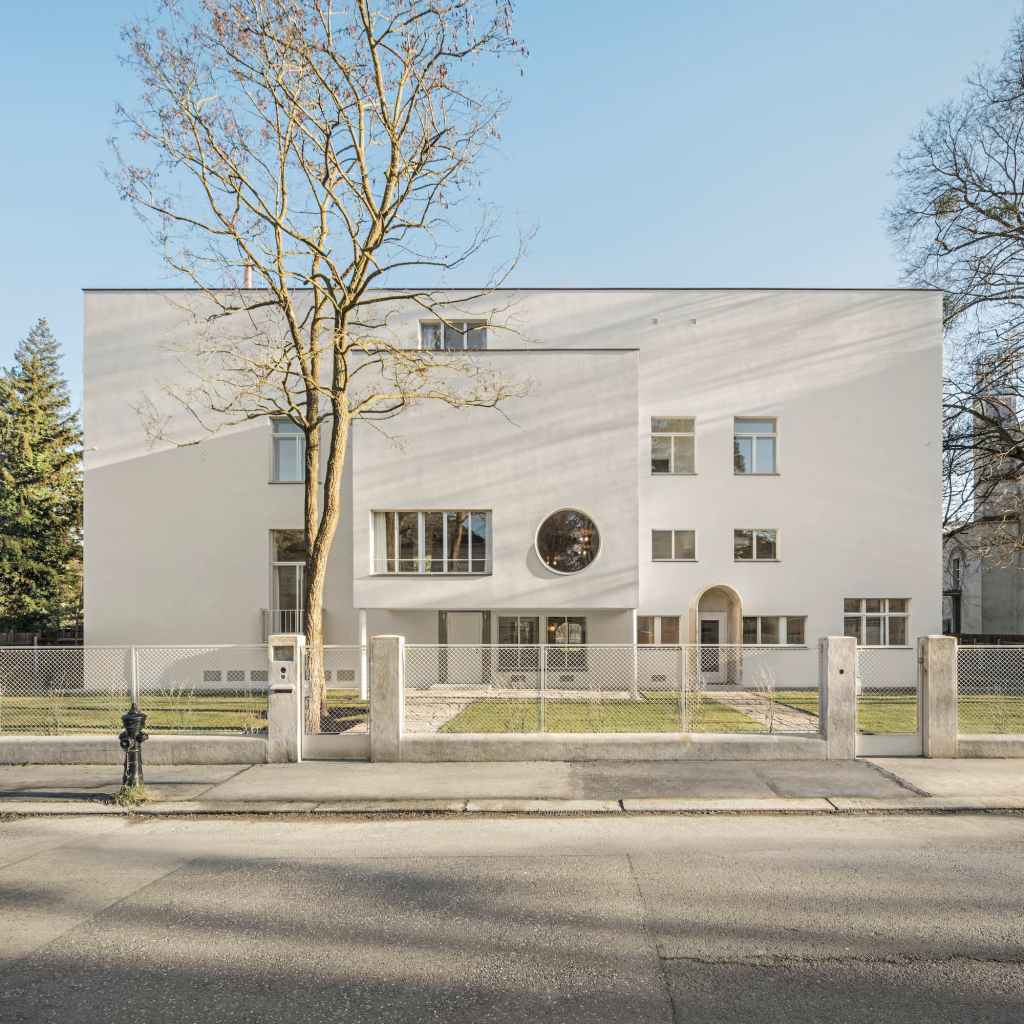
On March 8, 2026, a house that has long hovered at the edge of architectural mythology will finally become accessible. Villa Beer, the 1929–30 residence designed in Vienna-Hietzing by Josef Frank and Oskar Wlach, will open to the public for the first time in its nearly 100-year history—following a meticulous, multi-year restoration that returns the villa to its original spatial clarity while confronting the tragic history embedded in its walls.
Commissioned by Julius and Margarete Beer, liberal Jewish patrons deeply engaged with Vienna’s cultural life, Villa Beer is widely considered the culminating work of Frank’s architectural career and a keystone of second Viennese Modernism. Its reopening is not merely a preservation milestone. It is a cultural reckoning—about modernism’s lost paths, the violent rupture of Jewish life in Vienna, and an alternative architectural future that was never allowed to fully unfold.
“Between the concepts of cooking, eating, sleeping, working, and living lies what we call architecture.”—Josef Frank
A House That Refused Dogma
Designed at a moment when European modernism was hardening into doctrine, Villa Beer took another path. Frank and Wlach rejected rigid functionalism in favor of a spatially fluid, deeply humane architecture—one organized not by hierarchy but by movement, perception, and lived experience. Different ceiling heights, interlocking rooms, and shifting visual axes produce what Frank later described as the house as “path and place,” a three-dimensional promenade that unfolds intuitively rather than ideologically.
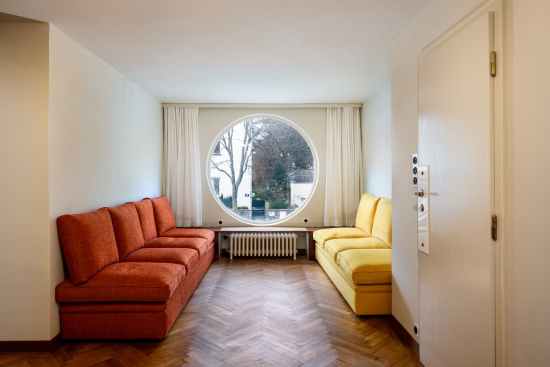
photo by Stefan Huger.
Architecture historian Christian Kühn has argued that the villa’s importance “can hardly be overestimated,” while critic Friedrich Achleitner called it “probably the most important example of Viennese residential culture of the interwar period.” Internationally, Villa Beer belongs in the same lineage as Villa Tugendhat, Villa Savoye, and Villa Müller—yet paradoxically, it did not receive monument protection until 1987.
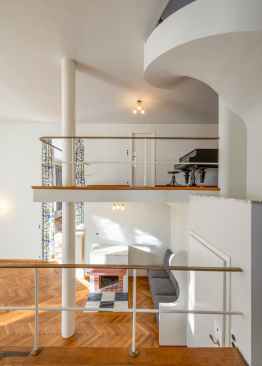
Photo by Stefan Huger.
Externally, the villa’s asymmetrical façade translates its interior freedom into built form. Terraces, balconies, basements, and attics dissolve the boundary between inside and out, anticipating a way of living that feels strikingly contemporary. Frank’s ambition was not abstraction but life itself: an architecture that welcomed spontaneity, comfort, and contradiction.
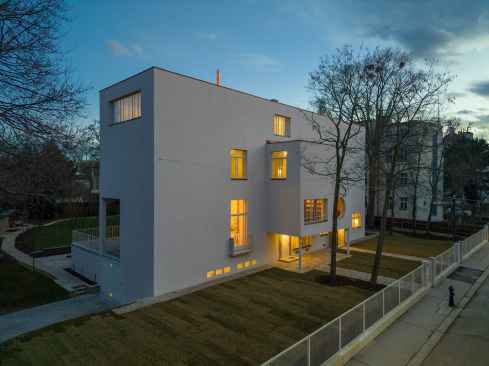
Photo by Stefan Huger.
“In its overall conception, the house represents a masterpiece in the relationship between rules and freedom.”—Friedrich Achleitner, 2010
Restoration as Ethical Act
The reopening of Villa Beer follows an extensive restoration led by owner Lothar Trierenberg and architect Christian Prasser, in close collaboration with Austria’s Federal Monuments Office. Preliminary restoration research was directed by Alexandra Sagmeister. The project, costing approximately €10 million, was supported by the City of Vienna and federal heritage subsidies.
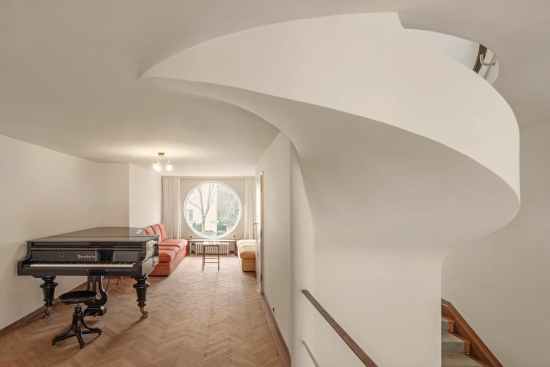
Photo by Hertha Hurnaus.
Rather than pursuing reconstruction as spectacle, the team focused on architectural integrity and long-term sustainability. Later alterations were carefully reversed: added windows closed, extraneous partitions removed, and original spatial sequences restored from the ground floor to the first floor. The basement was rebuilt from the ground up, structurally stabilized, and adapted for public use—housing a visitor foyer, education spaces, technical rooms, and a climate-controlled archive beneath the former terrace.
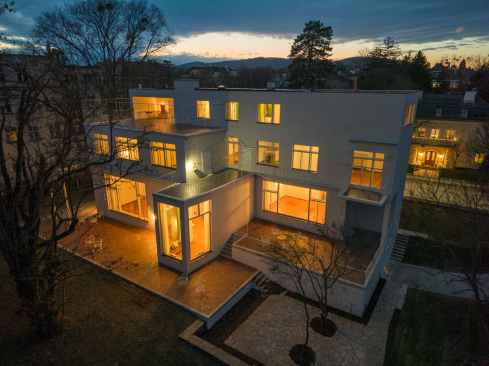
Photo by Stefan Huger.
The goal, Trierenberg explains, was not simply preservation, but proof of relevance:“Above all, the house should make tangible the power of good architecture – that is what is immediately palpable in Villa Beer.”
Equally deliberate was what was not restored. While built-in furniture survived and was painstakingly repaired, most original furnishings were lost to history. Rather than recreating them, the foundation chose to leave rooms intentionally sparse—allowing space for reflection, interpretation, and absence. “In future, the house should be filled with life and carry the ideas of modernism, as understood by Josef Frank, into the present.”
A Garden That Remembers
Landscape architects Auböck + Kárász, led by Maria Auböck, approached the garden as both design and memory. Mirror panels along the fence mark the original extent of the property, once twice its current size. Mature trees were preserved wherever possible, reinforcing Frank and Wlach’s conviction that nature was integral to architecture.
Two black locust trees—replanted after the originals succumbed to fungal disease—stand as quiet witnesses to continuity and loss. Today, the garden serves not only as a contemplative landscape, but as a setting for events, gatherings, and public life.
The House and Its Shattered Family
No reopening of Villa Beer can be separated from the fate of the family who built it.
Julius and Margarete Beer moved into their new home in the early 1930s, only to see their stability collapse amid economic hardship and the rising tide of antisemitism. Forced to rent out the villa to service debts, the family watched as tenants—including celebrated artists and musicians—passed through the house. Among them were Richard Tauber, Jan Kiepura, Martha Eggerth, and their secretary Marcel Prawy.
After the Anschluss in 1938, the family was torn apart. While some escaped into exile, their daughter Elisabeth Beer was deported in 1940 and murdered in Maly Trostinez in 1941. The villa’s story is inseparable from the systematic disenfranchisement, expulsion, and extermination of Vienna’s Jewish population—and from the cultural devastation that followed.
The architects themselves were not spared. Frank emigrated to Sweden in 1934, where he would later achieve international recognition through Svenskt Tenn. Wlach fled to the United States in 1938, never regaining the professional success he had known in Vienna.
A Living Institution, Not a Frozen Monument
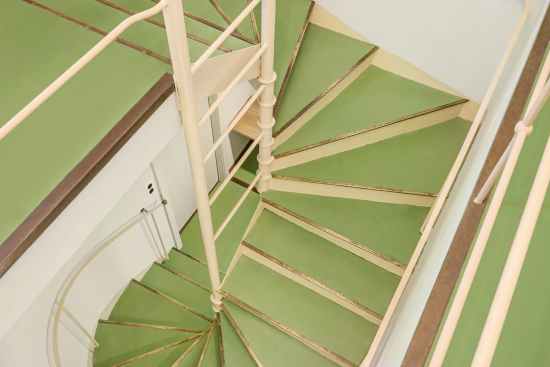
Photo by Hertha Hurnaus.
Under the direction of Katharina Egghart, Villa Beer is being positioned not as a static museum, but as a lived cultural institution. Visitors will encounter the house through guided and thematic tours, educational programs, symposia, and research initiatives. On select weekends, the villa will also be open for unguided visits—allowing guests to experience it “almost as if they were residents.”
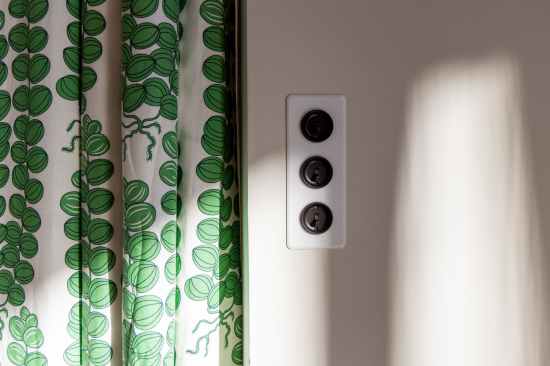
Photo by Stefan Huger.
“Even though Villa Beer will be open to the public in future, its character as a residential building will be preserved as far as possible. Visitors should feel like welcome guests.”
From autumn 2026, school programs, workshops, and academic formats will expand the villa’s role as a site of learning. An archive and collection will support future scholarship on architecture and the interwar period. Annual symposia and research residencies are planned.
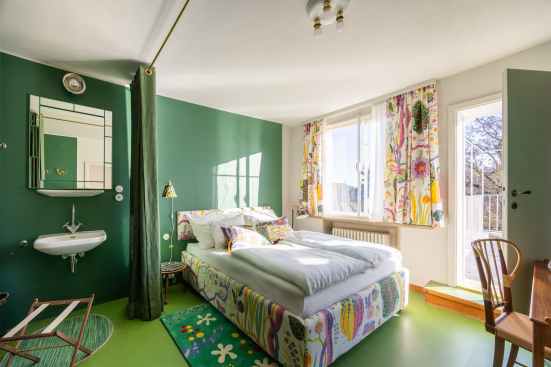
Photo by Stefan Huger.
Most unusually, the villa will once again be lived in. A newly created attic apartment—with three guest rooms, shared bath, kitchen, and roof terrace—offers researchers and artists the opportunity to inhabit the house. Furnished with textiles and furniture by Josef Frank, produced today by Svenskt Tenn with support from the Beijer Foundation, the rooms are designed for authenticity rather than luxury.
Why Villa Beer Matters Now
Villa Beer does not reopen as a triumphalist monument. It reopens as a question.
What might modernism have become if it had followed Frank’s humanistic instincts rather than hardening into ideology? What cultural futures were erased when Jewish architects, clients, and intellectuals were driven out—or murdered? And what responsibility does architecture carry when it finally re-enters public life?
Nearly a century after its completion, Villa Beer stands not only as a masterpiece of design, but as a moral document—one that insists architecture is never just form, never just function, but always entangled with the lives, losses, and possibilities of those who inhabit it.
On March 8, 2026, Vienna will not simply reopen a house. It will reopen a conversation modernism never finished.