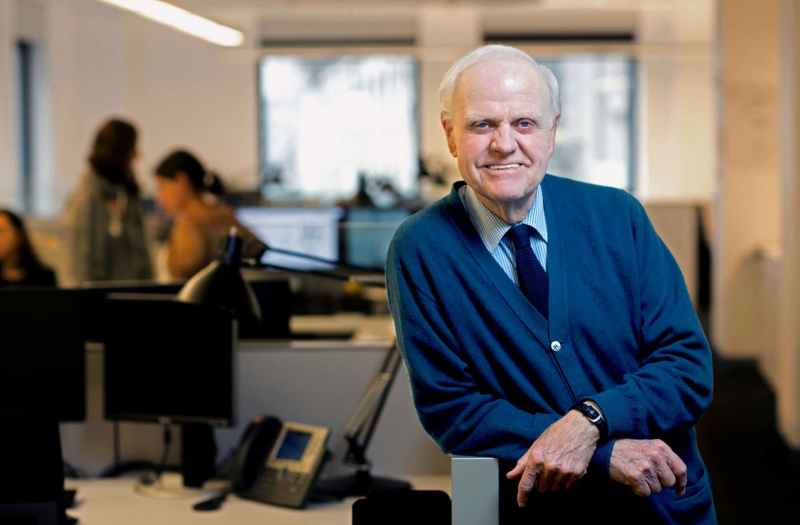
John H. Beyer, FAIA, AICP—known to nearly everyone as Jack—believed architecture’s most radical act was not invention, but care. Over more than five decades of practice, he helped shift the profession’s center of gravity away from heroic isolation and toward a model rooted in planning, preservation, and civic responsibility. His death marks the passing of one of the discipline’s most influential—and often understated—voices.
As a founding partner of Beyer Blinder Belle, Beyer was instrumental in establishing a practice philosophy that treated existing buildings and urban fabric not as obstacles to be overcome, but as essential collaborators in the design process. Together with John Belle and Richard Blinder, he helped articulate a mission that placed context—historical, social, and urban—at the center of architectural decision-making long before such concerns became mainstream.
“Planning, restoration and the design of new buildings in historic settings are the fundamental underpinnings of our firm,” Beyer once said. “With every project, whatever its focus, I’m always thinking of all three.”
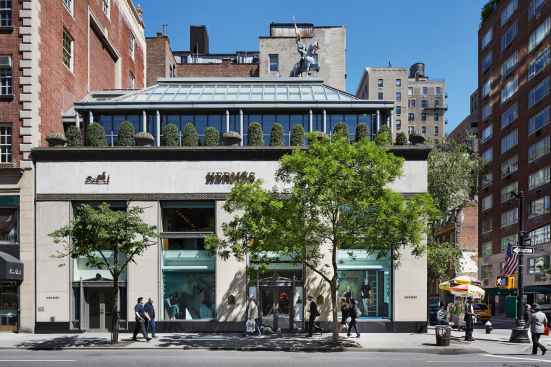
Hermès Flagship. Credit: Ari Burling
That triadic way of thinking—planning, preservation, and design—came to define not only BBB’s work, but a broader paradigm shift within American architecture. At a moment when preservation was often framed as defensive or nostalgic, Beyer treated it as forward-looking civic infrastructure. His work argued that cities gain resilience, meaning, and public trust when new interventions engage the layered realities of place rather than erase them.
Throughout his career, Beyer served as partner and lead designer on major cultural, residential, retail, and interiors projects, as well as private residences. Among his most consequential contributions was the transformation of Brooklyn’s Dumbo neighborhood from a largely derelict industrial zone into a vibrant mixed-use district. The decades-long collaboration with the Walentas family and Two Trees Management Company helped set a national precedent for adaptive reuse at an urban scale—one that balanced economic development with architectural continuity.
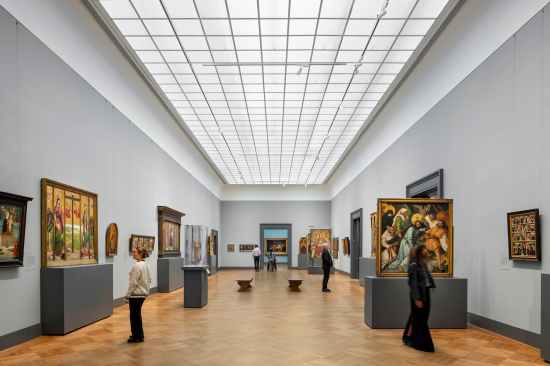
The Metropolitan Museum of Art, European Paintings Skylights Project. Credit: Paúl Rivera
Equally emblematic was his long engagement with the Metropolitan Museum of Art, a project of deep personal significance. Over more than a decade, Beyer quietly shaped the museum’s Fifth Avenue presence while also safeguarding the future of Marcel Breuer’s former Whitney Museum building as it changed hands—ensuring that a modernist landmark remained vital even as its institutional identity evolved.
His work with academic institutions revealed another dimension of his practice. At Denison and Harvard Universities—his almae matres—as well as Riverdale Country School, Beyer became known for his ability to guide complex, politically charged projects with a rare mix of design clarity, diplomacy, and candor. Whether on construction sites or in boardrooms, he set an uncompromising standard for quality—one that continues to define the firm’s reputation.
Inside the office, Beyer’s influence was just as profound. He was a mentor who led by example, demanding rigor while cultivating trust. Crucially, he also ensured that BBB was structurally prepared to outlast its founders, deliberately planning for generational succession in a profession often resistant to letting go. That foresight remains embedded in the firm’s leadership today.
“Many of us have indelible memories of working with Jack and of the impression he made on clients, projects, and our own careers,” said Elizabeth R. Leber, AIA, BBB’s Managing Partner. “He demanded the best of us, and he made us all into the people that we are today. Each and every one of us carries forward his legacy in the work we do under his name, now and into the future.”
Beyer earned his undergraduate degree from Denison University and his Bachelor’s and Master’s degrees in Architecture from Harvard University. He served as a juror and studio critic at Columbia and Cornell, lectured on historic preservation at Harvard, and served multiple terms on the Harvard Graduate School of Design Alumni Council. In 1979, he was elected to the College of Fellows of the American Institute of Architects, and in 1995, under his leadership, Beyer Blinder Belle received the AIA Architecture Firm Award.
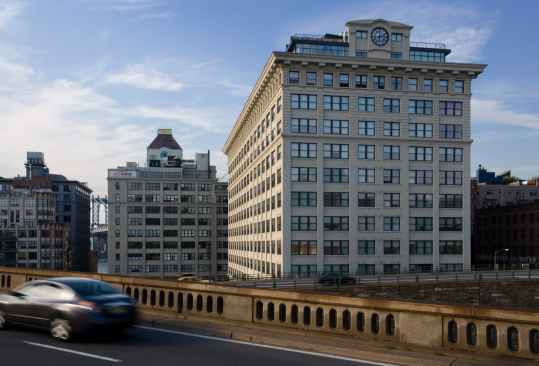
70 Washington Street, Dumbo, Brooklyn. Credit: Frederick Charles
Yet his legacy is less about accolades than about orientation. Beyer helped legitimize a professional ethos in which architecture is accountable—to buildings that came before, to communities that live with the consequences of design decisions, and to cities as evolving civic organisms.
He is survived by his daughters Kay Childs and Liz and Sophie Beyer; his sons Henry and Charles Beyer; and nine grandchildren. He was preceded in death by his daughter Katie Beyer and by his wife of nearly 60 years, Wendy Beyer, who passed away on January 10, 2026.
In lieu of flowers, donations may be made to the Beyer Blinder Belle Foundation. For the firm he helped build—and for a profession increasingly grappling with questions of stewardship, continuity, and responsibility—John H. Beyer’s influence endures not as monument, but as method.