
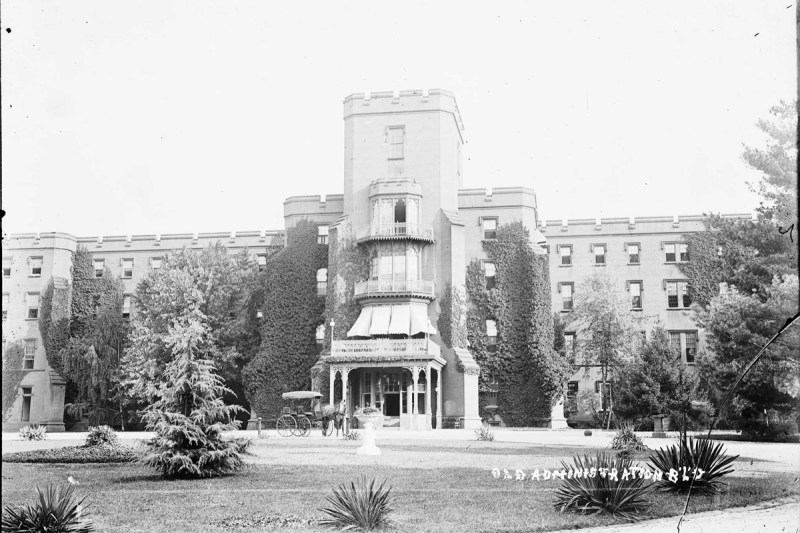
Opening March 25 at the National Building Museum (NBM) in Washington, D.C., the “Architecture of an Asylum: St. Elizabeths, 1852-2017” exhibition explores how the built environment of the nation’s first governmental psychiatric hospital, St. Elizabeths, affected its patients and became a model for asylum architecture today. The exhibition, which is hosted in collaboration with the U.S. General Services Administration (GSA), will be open to the public through Jan. 15, 2018.
Courtesy NBM
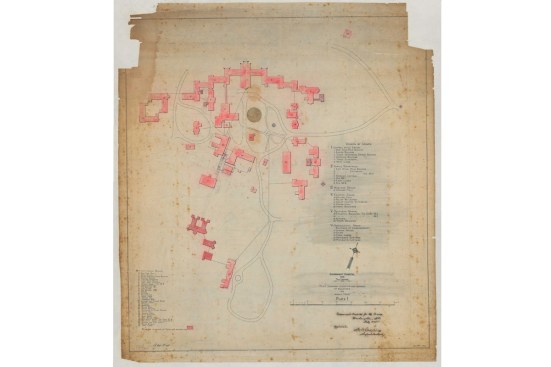
This 1895 site map shows the Center Building and other supporting structures of St. Elizabeths Hospital—then known as the Government Hospital for the Insane.
Built in 1855, the original hospital complex—located in southeast Washington, D.C.—was initially called the Government Hospital for the Insane, but its name was officially changed to St. Elizabeths in 1916. Founded by Dorothea Dix, an activist and pioneer in mental health reform, the institution aimed to end the cruel and inhumane practices widely used on patients in psychiatric facilities around the nation at the time. The hospital once treated famous patients like American poet Ezra Pound, and John Hinckley, Jr., who tried to assassinate President Ronald Reagan in 1981.
Courtesy NBM
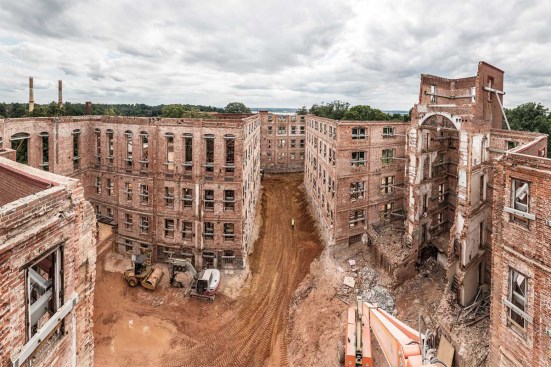
The Center Building of St. Elizabeths. (2016)
The institution made use of the Kirkbride Plan, a layout created by 19th century psychiatrist Thomas Story Kirkbride, which incorporated horizontally staggered building wings in order to let fresh air and sunlight into patients rooms, while providing them with additional privacy. The hospital was one of almost 80 institutions that utilized this plan by the end of the 1800s. In 1991, St. Elizabeths was designated a National Historic Landmark, and in April 2010, the facility moved to a new 450,000 square foot location nearby off Alabama Avenue. Currently, the original site is part of a rehabilitation and repurposing project headed by the GSA which includes converting the west campus of the complex into the U.S. Coast Guard headquarters and a Department of Homeland Security facility, as well as transitioning the east campus into a residential and community space project.
Courtesy NBM
Courtesy NBM
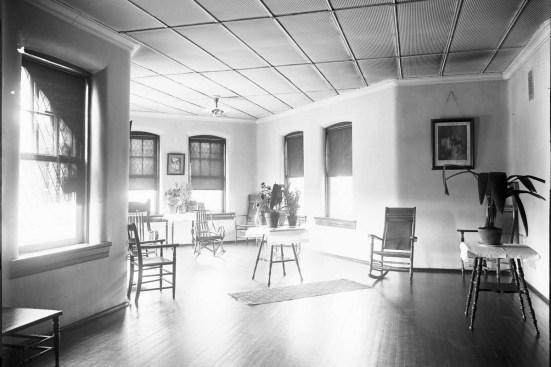
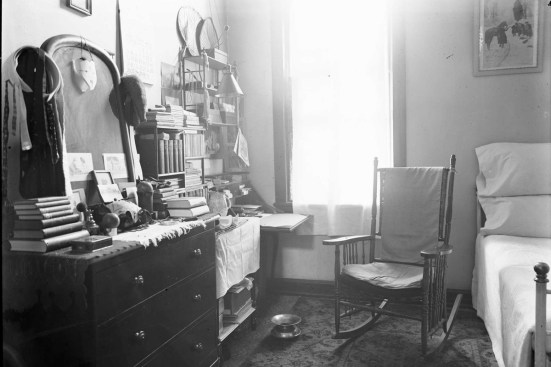
The NBM exhibition itself will be centered around the architectural drawings and models of the St. Elizabeths campus including sketches from the Library of Congress, a 1904 detailed model of the institution originally built for the St. Louis World Fair, and Dorothea Dix’s writing desk, according to the NBM press release. “The exhibition will [also] include architectural fragments from the recent renovations at the hospital complex, such as doors, window bars, and plaster-wall paintings carefully removed from the buildings during renovation,” says the release. Other pieces on display showcase the daily lives of patients with objects that range from a patient–made cat sculpture to an electroshock therapy machine.
Courtesy NBM
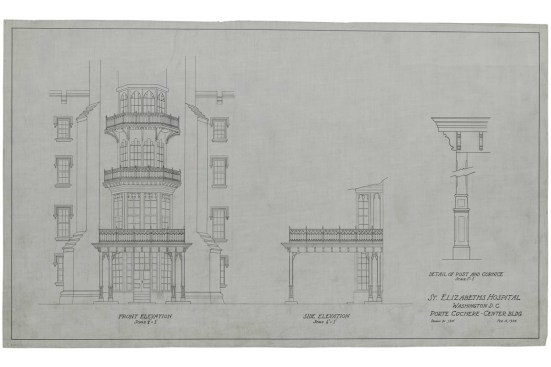
A Victorian porte-cochère—a protective and decorative canopy for visitors to the Center Building—was demolished and rebuilt several times during the history of St. Elizabeths. (1938)