
Project Description
This project is a winner in the 2018 COTE Top Ten for Students awards program, sponsored by the AIA and ACSA.
Student: Bianca Lin, Joshua Park, Wilson Fung
School: California College of the Arts
Faculty Sponsor: Janette Kim
From the Submission:
“Small lots will support resilience because they allow many people to attend directly to their needs by designing, building and maintaining their own environment.” – Stewart Brand, How Buildings Learn
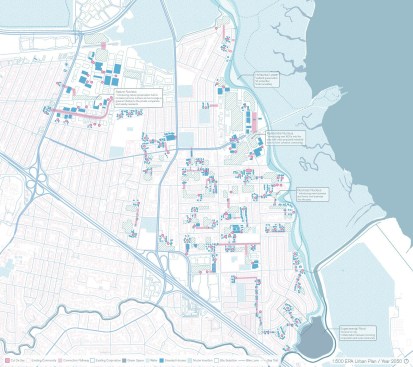
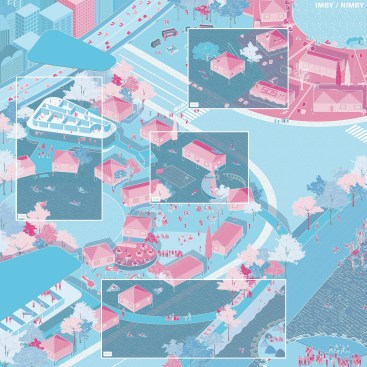
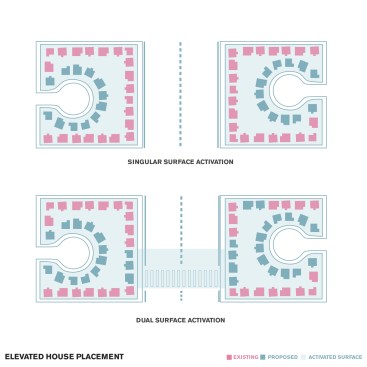
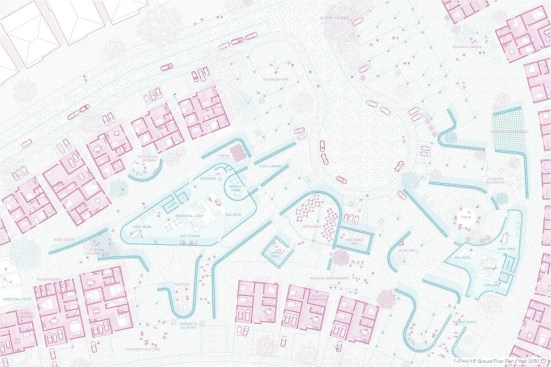
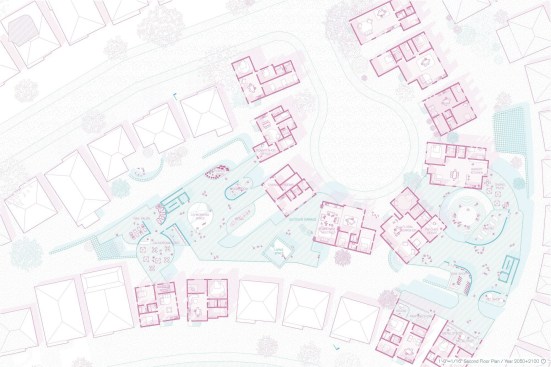
This project transforms cul de sacs in East Palo Alto into a network of interconnected structures that promote collaboration among residents and build resilience against sea level rise.
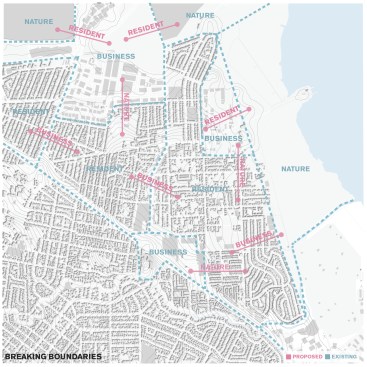
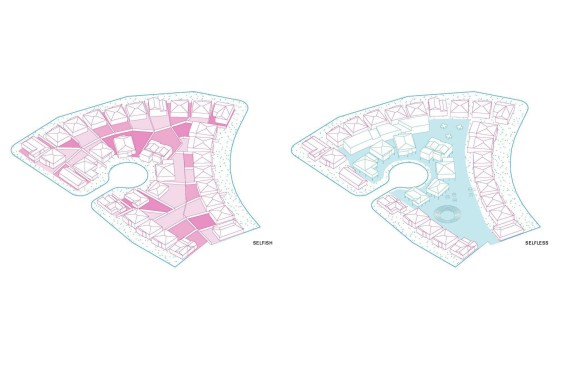
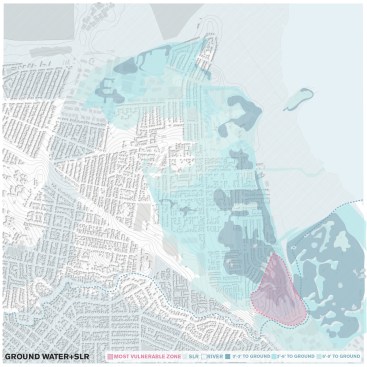
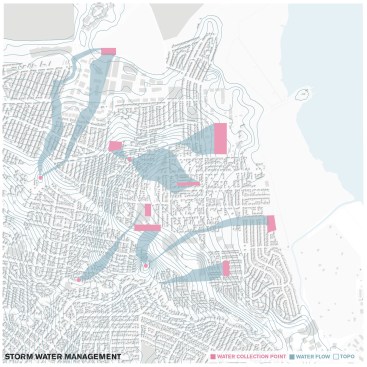
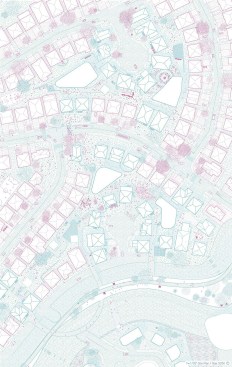
East Palo Alto is vulnerable not only to sea level rise pressures—even today, the city is frequently flooded by groundwater, storm water and the San Francisquito Creek—but also to risks we call ‘infrastructural disjunction’ and ‘selective sacrifice.’ EPA has been sliced apart by infrastructure such as roads and levees, leaving both newcomers and locals disconnected from natural and cultural resources. Though there are many ways to flood-proof houses, income inequities make such approach impossible and thus sacrifice the well-being of the city’s most vulnerable.
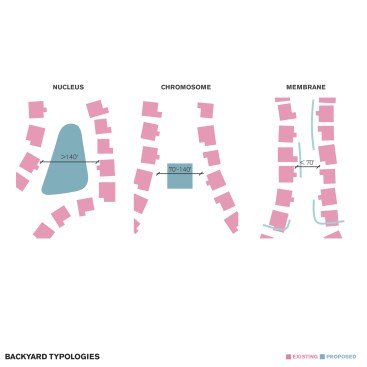
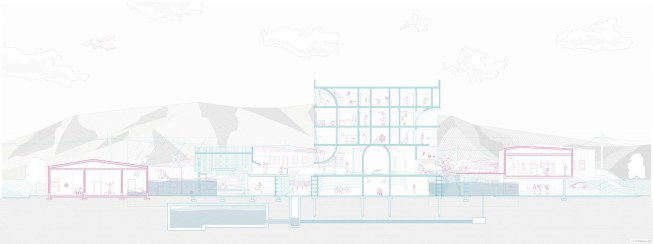
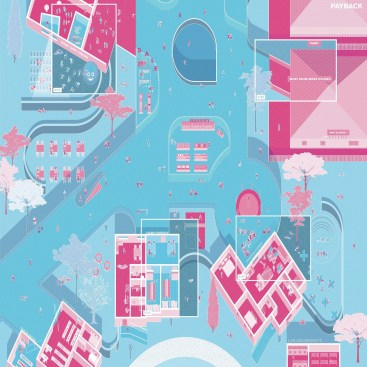
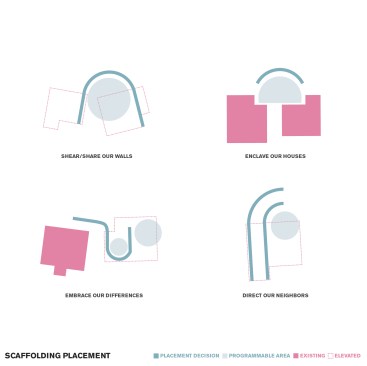
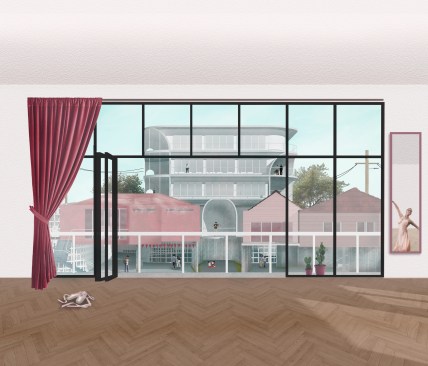
Instead, we want to recognize what EPA residents have established throughout the city’s strong history of activism. Our project builds on Stewart Brand’s ‘shearing layers’ concept, which suggests that change can take place incrementally by retrofitting buildings layer by layer. We propose to retrofit existing houses and add in three new architectural typologies: a ‘nucleus’ that houses residential and commercial spaces in freestanding buildings, a ‘chromosone’ that houses shared public functions in smaller pavilions, and a ‘membrane’ that serves as a flexible surface, or scaffold, to link buildings to each other and provide seismic stability across them. These create elevated spaces that can serve as an emergency response center during a flood, or house expanding family-owned businesses, such as an afterschool program or a rental apartment, that can support long-term economic stability.
This studio asked how architecture can shape what sociologist Ulrich Bech has called a “risk society”—a society uniquely challenged by the possible side-effects, or risks, of modernization. Students explored the idea that design in the era of climate change demands collective responses to the challenges of both everyday life and possible futures. Projects developed novel and effective techniques for architects to manage uncertainty.