
Project Description
FROM THE ARCHITECT:
Zaha Hadid Architects, working with Leonhardt, Andrä & Partner and
Sinotech Engineering Consultants, have won the international competition to
design the new Danjiang Bridge in Taipei for the Directorate General of
Highways, Taiwan, R.O.C.
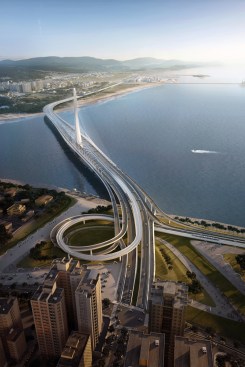
Located at the mouth of Tamsui River that flows through the capital Taipei,
the Danjiang Bridge is integral to the infrastructure upgrading program of
northern Taiwan. The bridge will increase connectivity between neighbourhoods
and reduce through-traffic on local roads within local town centres by linking
the Highways 2 and 15, with the West Coast Expressway (Route 61) and
Bali-Xindian Expressway (Route 64). By also reducing traffic from the congested
Guandu Bridge upriver, the Danjiang Bridge will greatly improve the northern
coast traffic system and enhance accessibility throughout the region with the
rapidly expanding Port of Taipei/Taipei Harbour, the region’s busiest shipping
port.
The Danjiang Bridge will also allow for the extension of Danhai Light Rail
Transportation (DHLRT) system over the Tamsui River to connect the town of BaLi
and the Port/Harbour with Taipei’s public rail network.
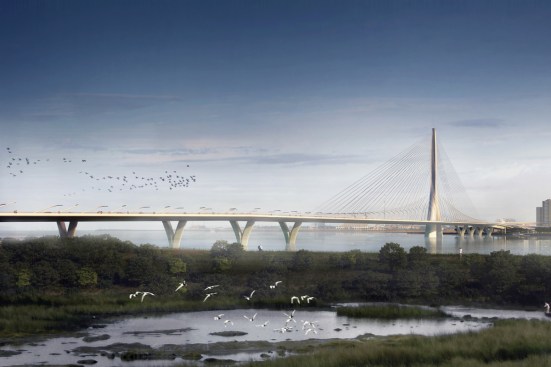
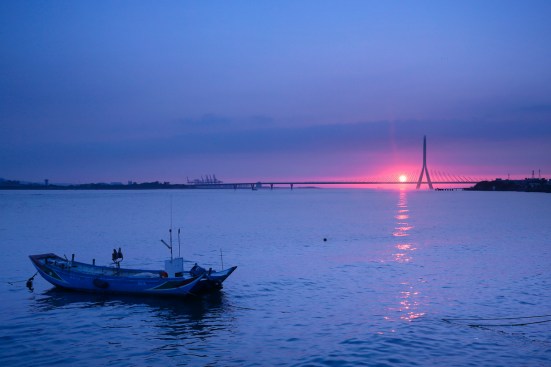
The Tamsui River estuary is a natural environment flanked by the urban
centres of Tamsui to the East and Bali to the west. The estuary is rapidly
growing in popularity with both residents and tourists as a recreational area
where people gather each day to watch the sun setting over the Taiwan Strait.
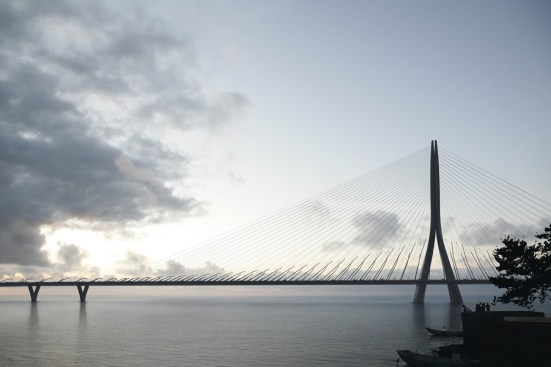
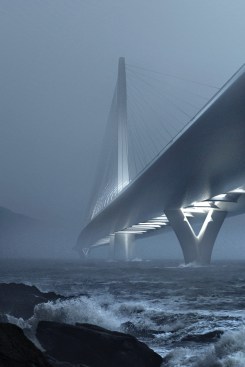
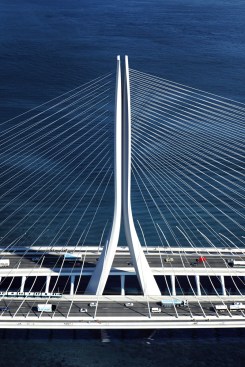
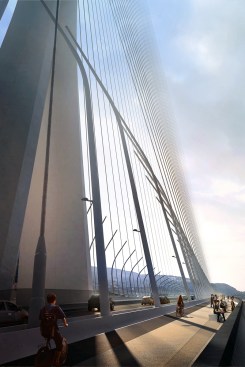
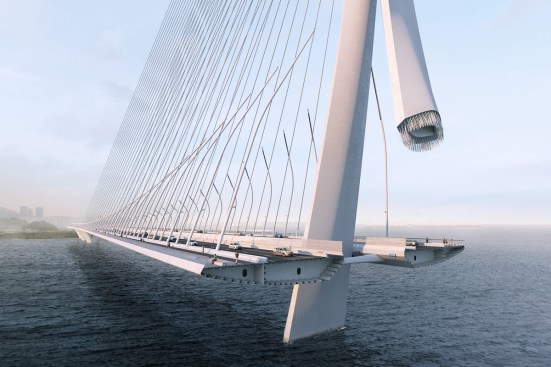
The cable-stayed bridge design minimises its visual impact by using only one
concrete structural mast to support the 920m road, rail and pedestrian deck
made from steel. The Danjiang Bridge will be the world’s longest single-tower,
asymmetric cable-stayed bridge.
The mast is designed and engineered to be as slender as possible and
positioned to offer the best structural performance, avoid impeding the
navigability of the river and also minimise any interference with the views of
the sunset from popular viewing points along the river. This single-mast
design also minimizes structural elements in the riverbed in accordance with
the increased protection programs of the estuary’s ecosystems.
Zaha Hadid Architects, with Leonhardt, Andrä & Partner and Sinotech
Engineering Consultants placed first in the competition. CECI and Nippon
Engineering Consultants placed second; Aecom Asia and Resources Engineering
Services placed third, MAA Group and Cowi placed fourth, with Oriental
Consultants with Pacific Engineers & Constructors and Pyunghwa Engineering
Consultants and Pacific Consultants with Taiwan Engineering Consultants and
Yuang Engineering Consultants placing joint fifth.